How to Steel Structural Parts Production?

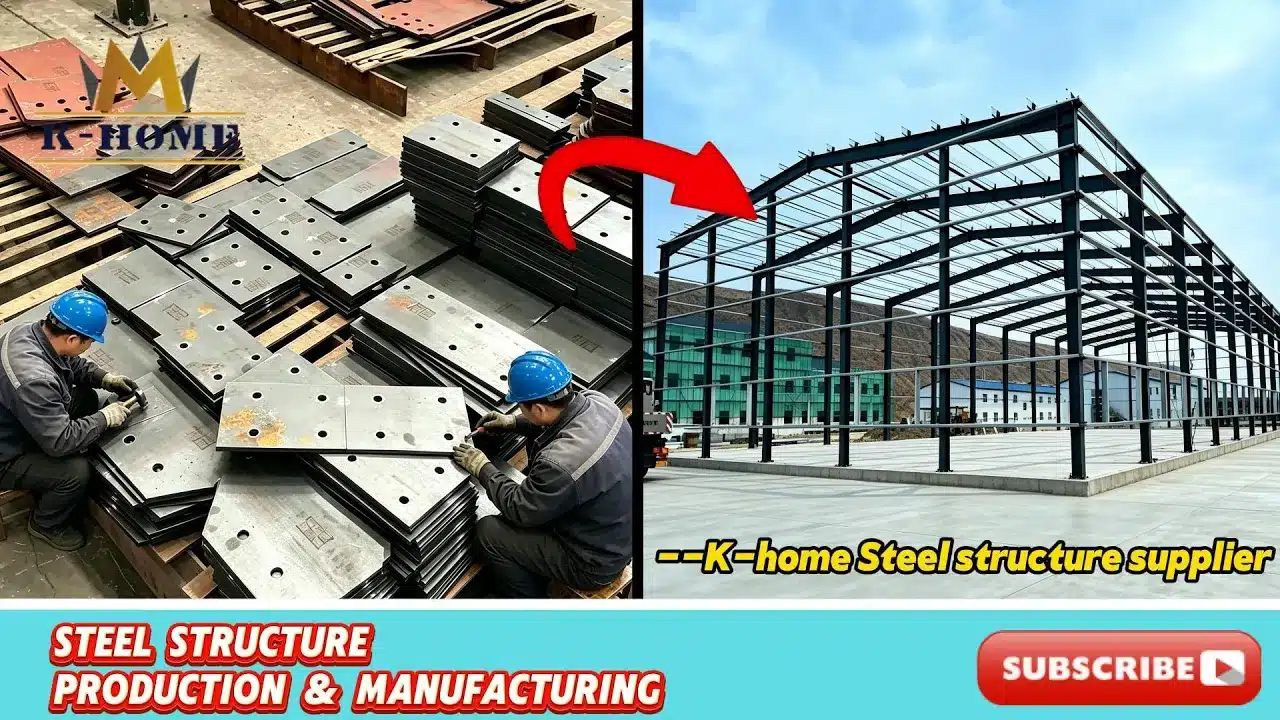
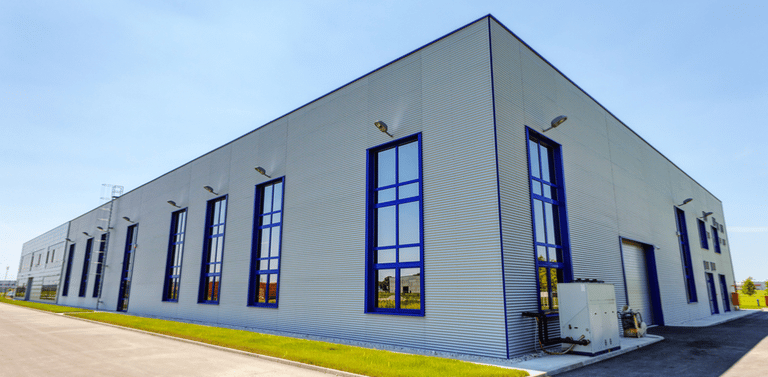
The production of steel structural components is a rigorous, systematic process. It typically begins with project preparation and raw material inspection, followed by layout and marking to establish dimensions. The components are then shaped through cutting, machining, assembly, and welding, and finally undergo anti-corrosion coating and factory inspection. Each stage is closely interlinked to ensure that the finished components meet design specifications and safety standards.

钢结构构件生产工艺流程

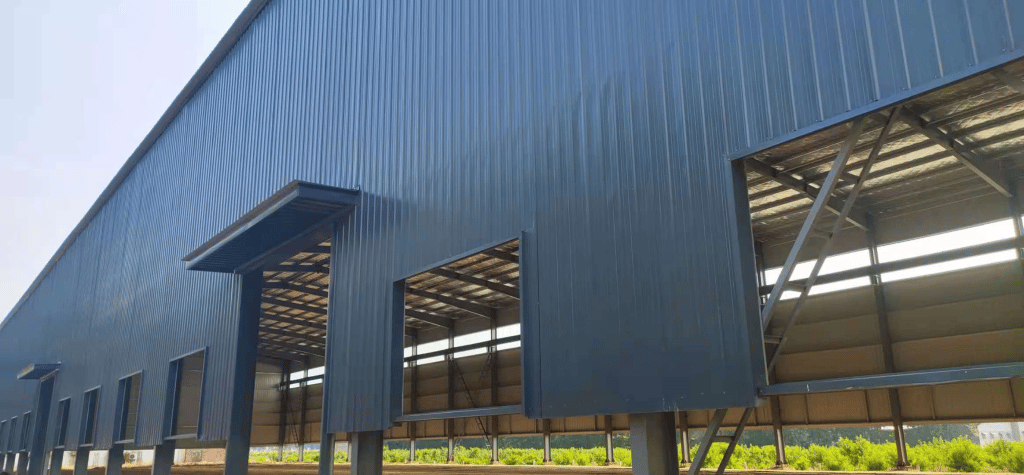
The safety and durability of 钢结构建筑物 depend on the manufacturing quality of each individual steel component. Any dimensional deviation or welding defect can compromise the safety of the entire structure.

Therefore, the production of steel components must strictly adhere to the building standards of the project location. Every step—from raw materials to the finished product—must be precisely controlled, with quality management integrated throughout the entire process to ensure defects are promptly eliminated.

Khome has established a rigorous quality management system; we oversee every stage of production with meticulous care to guarantee the quality of each component and ensure the safety of the entire building.

1. 来料检验

Before production begins, steel must be purchased from reputable mills. Upon arrival, it shall undergo strict inspection of chemical composition and mechanical properties (such as yield strength and tensile strength). Only materials that pass all tests are allowed to be accepted into inventory and put into use.

KHOME insists on long-term strategic cooperation with reputable steel mills. We also enforce incoming material inspection standards. These standards are even stricter than national requirements.

2. Stakeout

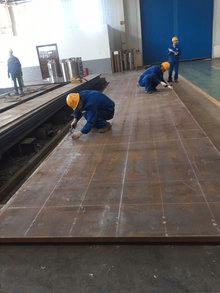
  • Stakeout: Draw full-scale (1:1) patterns on the layout table, verify drawing dimensions and hole spacings, making templates and sample rods for cutting, bending, milling, planing, hole making, etc., for subsequent processing.

3. Draw Lines

包括检查核对材料,在材料上标出下料、铣削、刨削、打孔等加工位置,打孔,标记零件编号等。材料确定应注意以下问题:

  • 根据配料表和模板,对套件进行裁剪,尽可能节省材料。
  • 要有利于切削加工,保证零件的质量。
  • 当工艺有规定时,应按规定取材。

4. Blanking and Cutting

Materials are cut according to drawing specifications. Different cutting equipment is used for different needs. This ensures that all parts meet precise dimensional requirements.

Common cutting methods include the following:

  • Flame cutting. This is suitable for thick plates.
  • Plasma cutting. It offers fast speed and high precision.
  • Laser cutting. It provides the highest precision but comes at a higher cost.

After cutting, all slag and burrs must be removed. This step ensures clean and ready-to-use workpieces.

Cutting not only separates the basic profile of the part but often simultaneously machines the weld bevel, preparing it for subsequent assembly.

5. Hole Making and Edge Processing

Hole making and edge processing further define the connection characteristics of steel components.

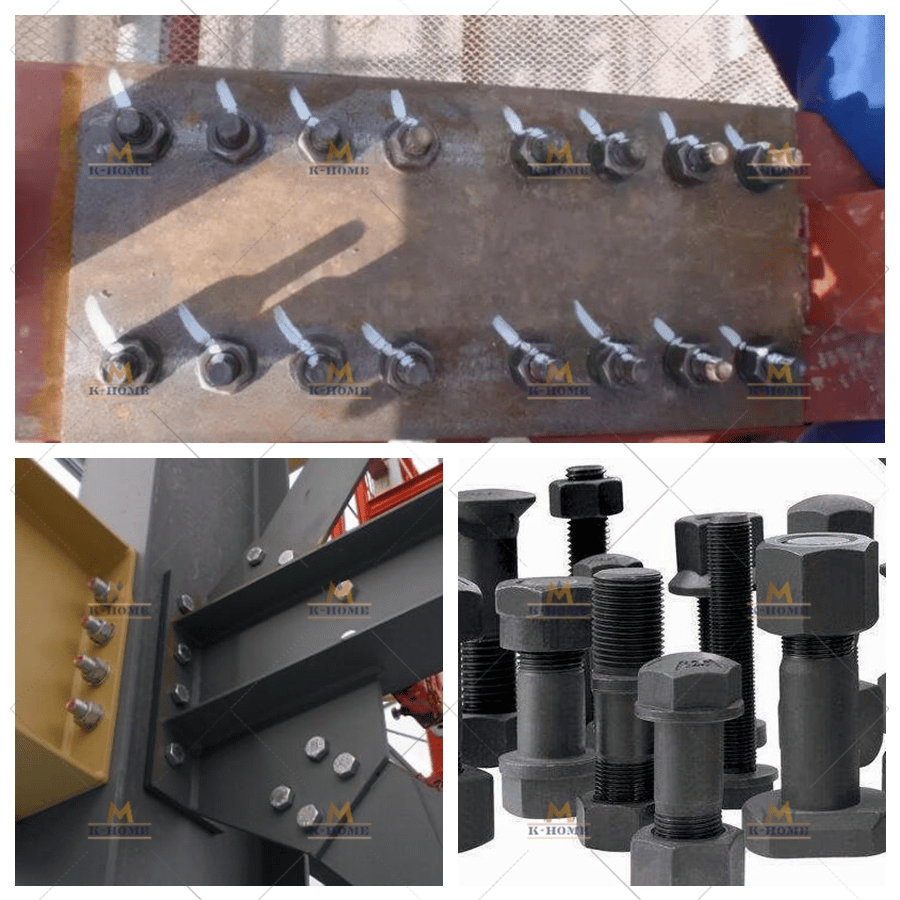
High-strength bolted connections are a primary method for joining steel structures. So, the precision of bolt holes directly impacts installation quality. Utilizing CNC drilling machines or 3D drilling machines ensures positional accuracy across hole patterns.

Edge processing involves milling or grinding away any hardened layers or minor defects resulting from the cutting process, thereby ensuring the quality of welded joints.

6. Steel Structure Components Assembly

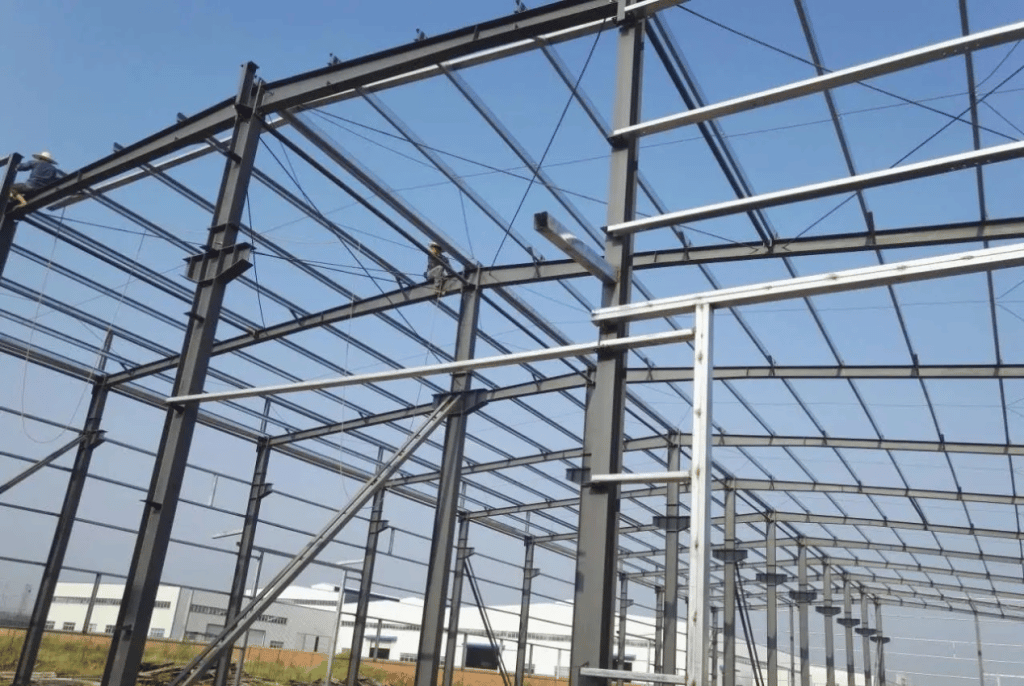
The assembly of steel structural components refers to the process of joining cut steel plates, profiles, and other parts—using tack welding or connecting elements—to form integral structural members (such as H-beams, columns, and girders).

Methods include ground sampling method, copy copy assembly method, vertical assembly method, tire mold assembly method, etc.

This process is carried out on specialized assembly platforms or jigs, utilizing positioning blocks, clamps, and measuring tools to ensure the precise relative positioning of the parts. At this stage, the steel components are secured only by temporary tack welds in preparation for final welding.

7。 焊接

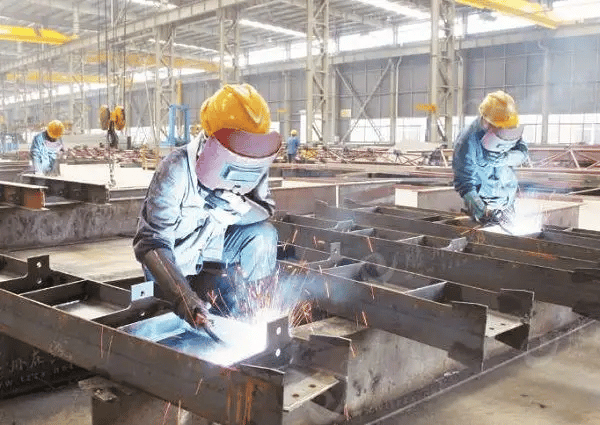
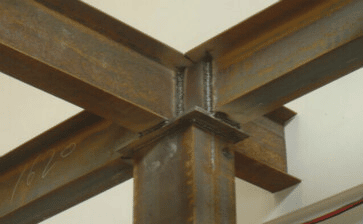
Welding is a critical process in the fabrication of steel structural components. It imparts the final structural integrity to the members. Commonly used methods include manual arc welding, gas-shielded welding, and submerged arc welding. Preheating is required before welding, and post-weld heat treatment is necessary to relieve stress;

At its core, welding involves the localized melting and re-solidification of metal; this process inevitably entails thermal expansion and contraction, leading to welding deformation. Controlling deformation is the primary task at this stage, and methods such as symmetrical welding sequences, pre-setting for reverse deformation, and rigid fixturing are used to keep deformation within permissible limits.

.阅读更多

8. Straightening

Post-welding straightening is essential. Any bending or distortion resulting from the welding process is corrected using mechanical methods (such as a hydraulic press) or localized flame heating.

Following straightening, key dimensions must be re-verified, and the welds subjected to visual inspection and non-destructive testing (such as ultrasonic and magnetic particle testing) in accordance with specifications to confirm that both internal quality and external profile meet the required standards.

9. Treatment Of The Friction Surface

Shot blasting of steel components is a surface treatment process primarily used to remove impurities—such as mill scale, rust, and welding slag—from the surface, while simultaneously increasing surface roughness to enhance the adhesion of subsequent coatings.

Surface pretreatment: Abrasive blasting to Sa 2.5 grade (anchor profile depth of 40–80 μm), with additional grinding within 20 mm of welded areas.

10.涂层

After undergoing final dimensional and shape inspections, the steel components proceed to the coating stage.

Coating is not merely a simple matter of applying paint; it is a systematic protective process.

The process begins with a secondary surface cleaning of the steel components, followed by the application of an anti-rust primer.

Primers are typically zinc-rich or based on an epoxy zinc-rich system, preventing corrosion of the substrate through cathodic protection or a barrier effect. An intermediate coat increases the total coating thickness and enhances the barrier effect, while the topcoat provides weather resistance and the desired color.

进一步阅读:钢结构安装与设计

PEB钢结构建筑

其他附加附件

建筑常见问题解答

为您精选的博客

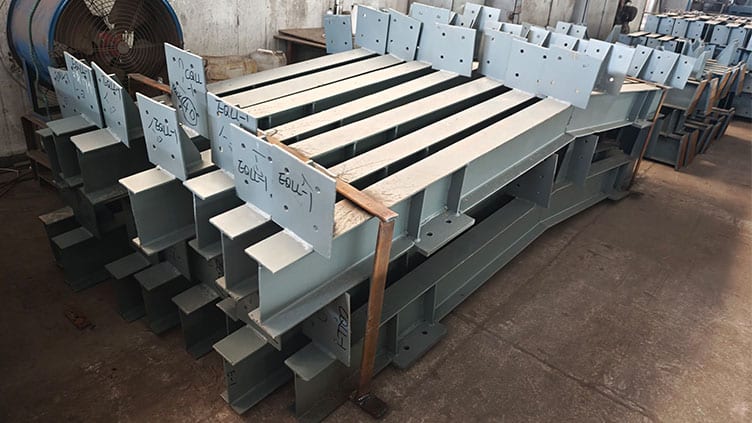
Once all manufacturing processes are complete, the components enter the pre-shipment preparation stage, which includes:

  • Clearly and securely marking component identification numbers to facilitate on-site identification and lifting.
  • Welding temporary lifting lugs or connection plates at designated locations in accordance with the transportation and installation plan.
  • Performing thorough cleaning and packaging to prevent coating damage or contamination during transit.

At this point, a fully functional steel structural component, clearly identified and ready for on-site installation, is officially complete.

关于K-HOME

——中国预制金属建筑制造商

河南 K-home 河南新乡钢结构有限公司位于河南省新乡市,成立于2007年,注册资本20万元,占地面积100,000.00万平方米,员工260人,是一家集装配式建筑设计、工程概预算、制作、安装钢结构、夹芯板为一体的专业建筑工程总承包二级资质企业。

自定义尺寸

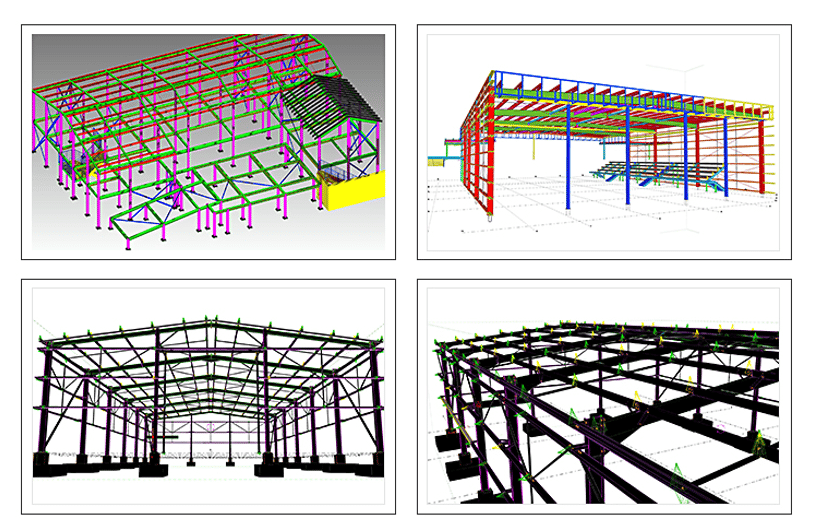
我们提供任意尺寸的定制预制钢结构,完美满足您的多种需求。

免费设计

我们免费提供专业的CAD设计,您无需担心不专业的设计影响建筑安全。

制造业生产环境

我们选择优质的钢材并采用先进的加工技术,确保打造耐用、坚固的钢结构建筑。

安装

我们的工程师会为您定制​​3D安装指南,您无需担心安装问题。

customized steel structure buildings according to your application

K-HOME我们的预制钢结构建筑已在全球众多国家和地区成功应用,包括非洲的莫桑比克、圭亚那、坦桑尼亚、肯尼亚和加纳等市场;美洲的巴哈马和墨西哥等地区;以及亚洲的菲律宾和马来西亚等国家。我们熟悉各种气候条件和审批体系,能够为您提供兼具安全性、耐久性和经济性的钢结构解决方案。

立即联系我们的客户服务团队,我们将竭诚为您打造完全符合您需求的定制钢结构建筑。

建筑面积

长度(侧壁,米)

宽度(端墙,米)

墙高(檐口,米)

应用/使用

其他要求

如果您提供以下信息,我们将为您提供更准确的产品报价。

立即定制设计

为什么 K-HOME 钢结构建筑?

致力于创造性解决问题

我们以最专业、最高效、最经济的设计,根据您的需求定制每栋建筑。

直接从制造商处购买

钢结构建筑源自原厂,精心挑选优质材料,确保质量和耐用性。厂家直销,让您以最优惠的价格获得预制钢结构建筑。

以客户为中心的服务理念

我们始终以以人为本的理念与客户合作,不仅了解他们想要构建什么,而且了解他们想要实现什么。

1000+

交付结构

60+

国家

15+

体验s

联系我们 >>

有任何疑问或需要帮助? 在我们开始之前,您应该知道几乎所有的预制钢结构建筑都是定制的。

我们的工程团队会根据当地的风速、雨荷载、长度*宽度*高度以及其他附加选项。或者,我们可以按照您的图纸进行。请告诉我您的要求,我们会做剩下的事情!

请使用表格与我们联系,我们将尽快与您联系。

关于作者: K-HOME

K-home 钢结构有限公司 占地面积120,000万平方米。我们从事设计、项目预算、制造和 PEB钢结构安装 具有建筑工程总承包二级资质,产品涵盖轻钢结构、 PEB 建筑低成本预制房屋集装箱房屋、C/Z钢、各种型号彩钢板、PU夹芯板、eps夹芯板、岩棉夹芯板、冷库板、净化板、等建筑材料。