
Multi Span Steel Buildings
Multi Span Steel structure Buildings: Prefabricated, Open-Space Structures for Large-Scale Projects
In industrial production, logistics and warehousing, or commercial operations, are you facing these challenges: needing large continuous space but restricted by the rigid division of traditional buildings? Stuck with tight project schedules held back by inefficient on-site construction? Wanting to renovate your building for future business expansion, but not knowing where to start? Multi-span metal buildings (also known as multi-span steel structures), with their modular design, prefabricated construction, and high adaptability, precisely address these pain points, emerging as the preferred choice for medium and large-scale buildings.

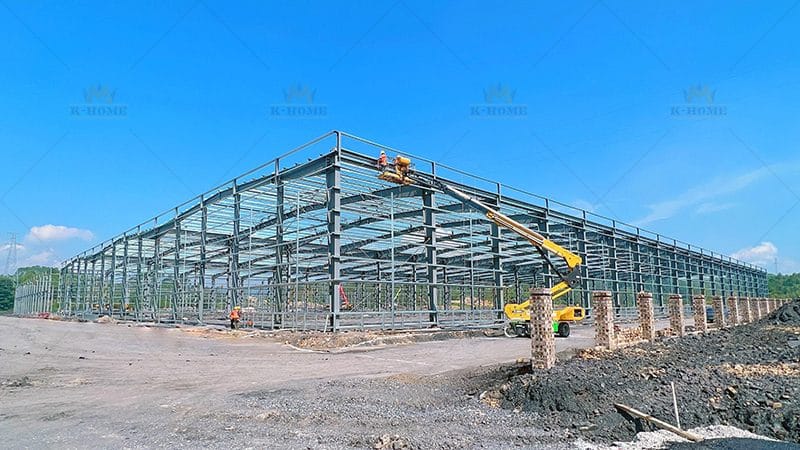
120×150 Steel Building (18000m²)
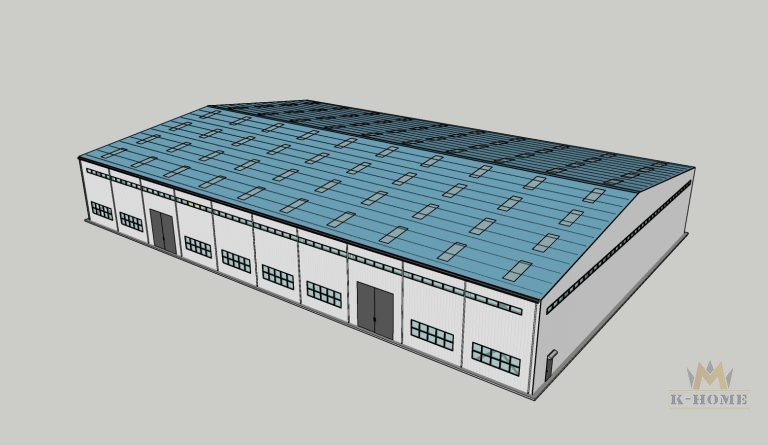
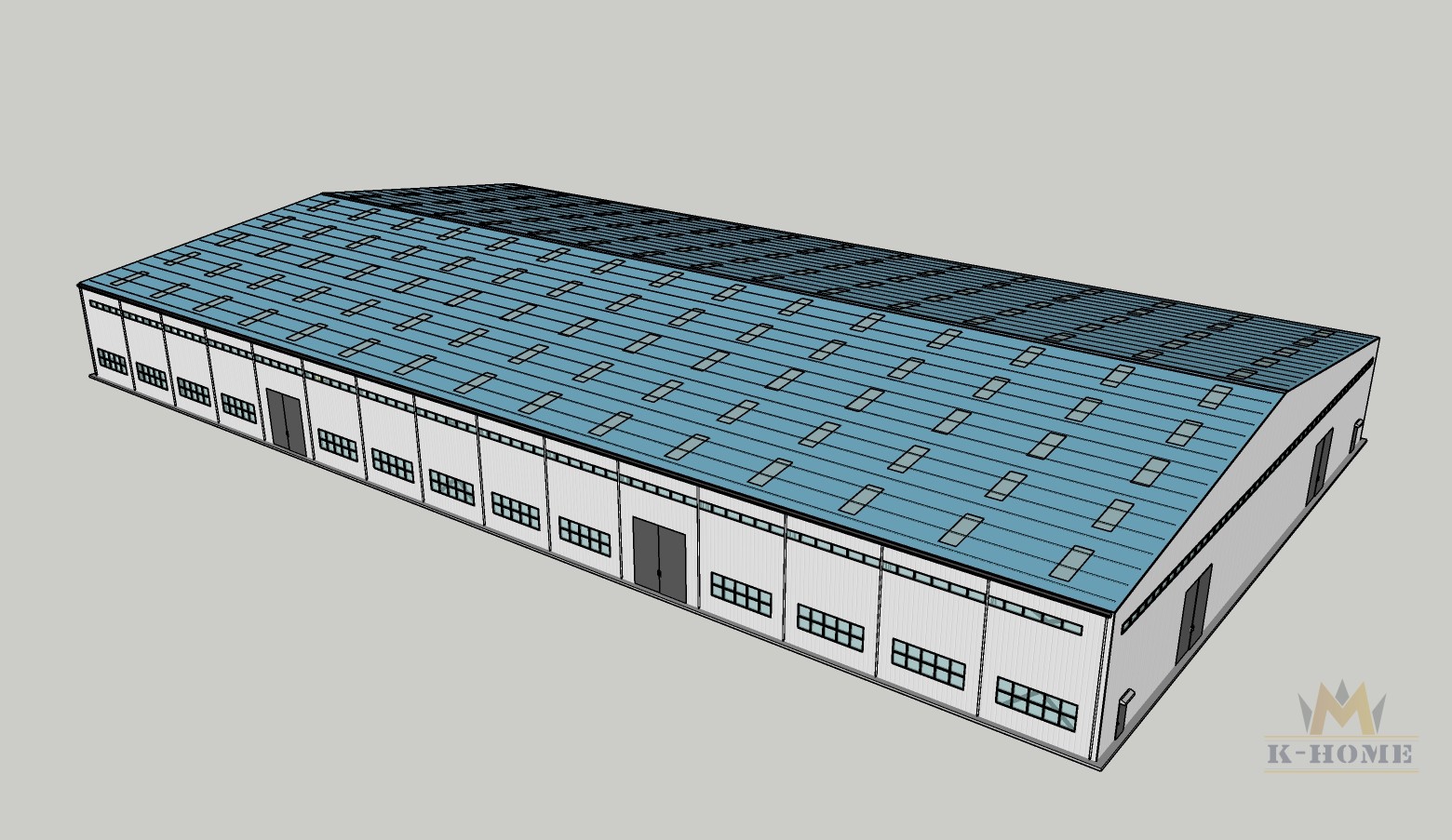
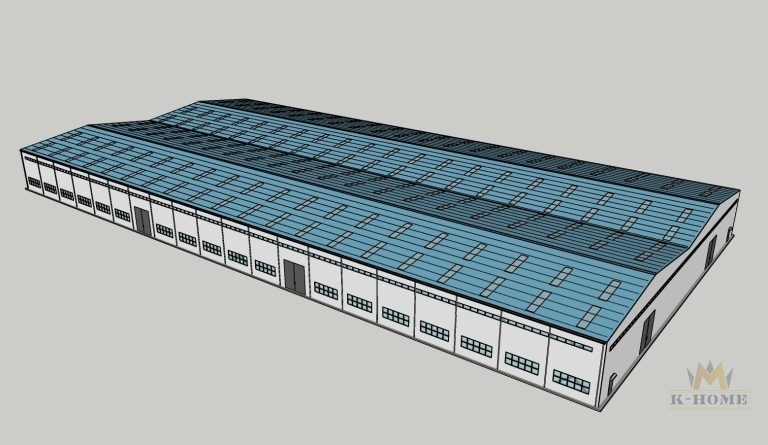
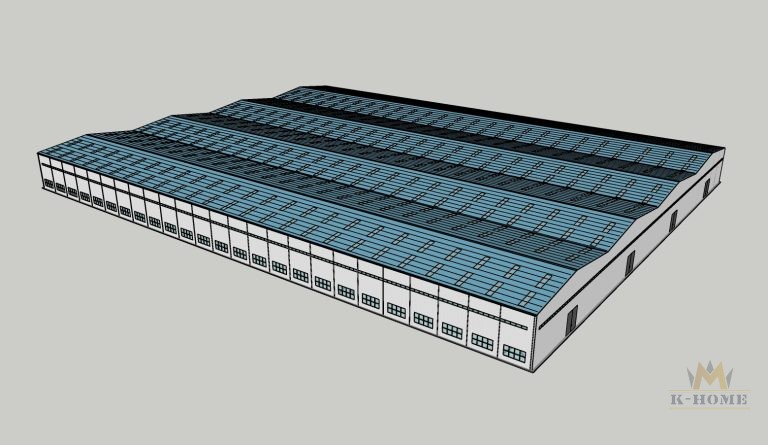
Understanding the Differences and Relationships Between Multi-Span and Long-Span Steel Buildings
Many people confuse “multi-span” and “large span” steel structures when choosing industrial buildings. In fact, the core difference between the two lies in their “structural form” and “coverage range”—and it’s easy to tell them apart with a simple explanation.
Multi Span Steel Buildings
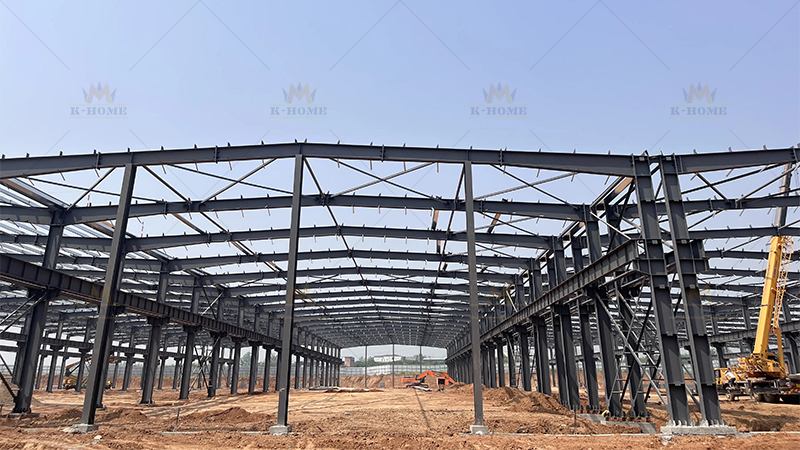
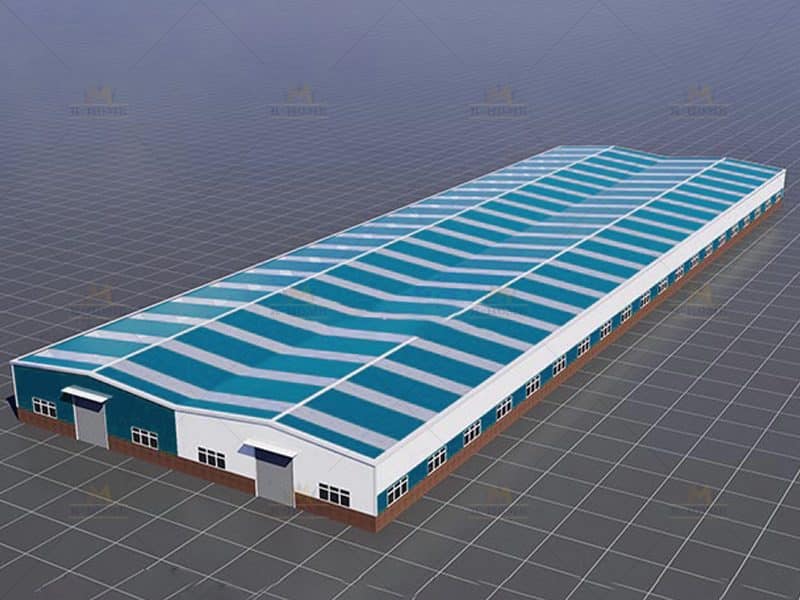
Simply put, multi-span steel buildings are a type of structure composed of two or more independent single-span structures connected via joints. These single-span structures can be arranged side by side (horizontal multi-span) or connected vertically end to end (vertical multi-span), with spans that can be flexibly combined (e.g., 30m × 3 spans, 50m × 2 spans). They not only meet the demand for extra-large spaces but also adapt to irregular sites.
A key characteristic of multi-span steel structure buildings is having 2 or more spans. Internally, the building is divided into multiple continuous independent spatial sections by supporting structures such as steel columns and steel brackets, with each section being one “span.” Typical applications include logistics parks, large production workshops, connected office buildings, and more. Through designs with 3, 5, or even more spans, they can fulfill the needs of large-area and multi-functional use.
Long Span Steel Buildings
Long-span steel structures typically refer to a steel structure type with a single-span width of over 30 meters, capable of covering large areas without the need for intermediate columns. This type of structure emphasizes “single-span capacity”—i.e., the main load-bearing span—breaking through the span limitations of traditional buildings. The spacing of the support structures for a single span, which is the horizontal distance between two rows of steel columns or steel supports, does not require additional intermediate columns for reinforcement, enabling an open and unobstructed internal space. Scenarios such as large stadiums and convention centers rely on this single-span ultra-large coverage capability.


In simple terms, multi-span metal buildings combine multiple smaller spans to create a large space. Often based on “long-span single spans” as basic units, they offer the dual advantages of spaciousness and flexible zoning. Long span metal buildings, by contrast, “support a large space with one single large span.” The two can be used in combination (e.g., long span + multi span), but each has distinct advantages for specific application scenarios.
Structural Composition Principles and Core Advantages of Multi-Span Steel Buildings
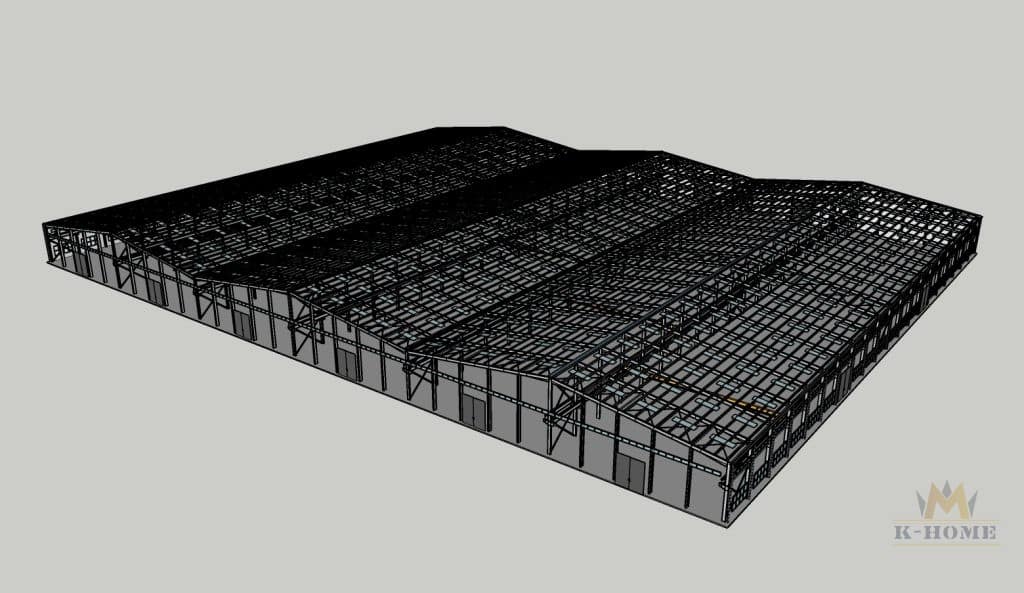
The core logic of multi-span buildings lies in modular assembly through segmented construction, enabling coordinated force distribution across all parts:
- Main Load-Bearing Frame: Each span’s independent frame consists of steel columns and steel beams. Steel beams span horizontally, while steel columns provide vertical support—each frame bears the load of its own area (e.g., roof weight, snow, wind force).
- Connecting Structures: Multiple independent frames are linked into a single unit via tie beams and supporting trusses, ensuring coordinated force distribution across spans and preventing uneven stress on individual frames.
- Enclosure System: Exterior walls and roofs are enclosed with materials such as metal profiled sheets and insulation cotton, integrating windproof, waterproof, and thermal insulation functions.
- Foundation and Support: Each steel column is paired with an independent foundation to disperse weight into the ground, ensuring the overall structure remains stable without settlement or inclination.
Simply put, it’s like “building with blocks”—first, the “blocks” (frames) for every single span are fabricated, then connected using “linkers” (tie beams and supports). This design maintains the stability of each module while forming a reliable overall structure.
Core Structural Features and Advantages of Multi-Span Steel Buildings
Flexible Customization of Span Combinations
The greatest advantage of multi-span steel buildings is their flexible adaptability. Both the number of spans and the width of each span (typically 10-30 meters per span) can be adjusted based on site size and usage requirements. The number of spans can range from 2 to dozens, and single-span widths can be customized from 8 to 35 meters—suitable for constructing compact, efficient small production workshops or spacious, transparent large exhibition centers.
New spans can be added adjacent to the existing structure without the need for load-bearing partitions between spans. Later, as your business grows, you can flexibly divide areas into production zones, warehousing zones, or office spaces. It’s even possible to add mezzanines or crane tracks without demolishing or modifying the original building, offering far greater flexibility than traditional concrete structures.



Excellent Stability of Steel Structures
Inter-span connections adopt high-precision steel truss splicing technology. Coupled with the inherent high strength and good toughness of steel itself, professional joint design, and the “synergistic force-bearing” design of multi-span structures, the building’s structural stability is greatly enhanced: it can resist strong winds horizontally, bear the weight of snow and heavy equipment vertically, and even when subjected to local loads (such as heavy objects stored in a single span), the pressure can be dispersed through the connecting structures without local deformation. It is particularly suitable for scenarios with high requirements for structural stability, such as industrial production and heavy-duty warehousing, eliminating concerns about loosening or settlement after long-term use.
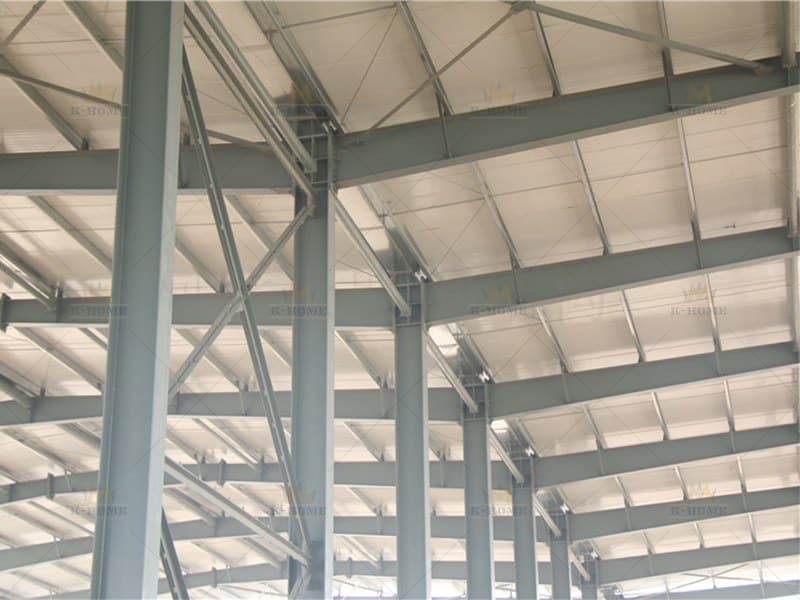
Steel in Metal Buildings Is More Eco-Friendly and Durable
Most multi-span metal buildings use recyclable steel such as Q355B. After the building is demolished, the steel can be reused. During construction, there is no dust or sludge pollution, complying with green building standards.
Additionally, steel surfaces undergo professional anti-corrosion and rust-proof treatments (e.g., galvanization, painting) to resist moisture, corrosion, and other environmental factors. Daily maintenance only requires simple inspections—unlike concrete, which is prone to cracking and weathering. With proper care, multi-span steel structures can have a service life of over 50 years, with low maintenance costs limited to regular checks of anti-corrosion coatings and joint connections.
About K-HOME
—— Steel Building Manufacturers China
Henan K-home Steel Structure Co., Ltd is located in Xinxiang, Henan Province. Established in the year 2007, registered capital of RMB 20 million, covering an area of 100,000.00 square meters with 260 employees. We are engaged in prefabricated building design, project budget, fabrication, installation of steel structure and sandwich panels with second-grade general contracting qualification.
What Key Highlights Make Multi-Span Steel Buildings Stand Out in Industrial Construction Choices?

Key Design Considerations for Multi-Span Steel Buildings in Practical Applications
The core of designing multi-span metal buildings for real-world use lies in rational spatial layout planning, precise alignment with load-bearing requirements, and advanced component connection techniques. This approach not only ensures the structure meets industry-specific functional needs but also guarantees long-term stability and operational efficiency. Designing these multi-span steel structures is far more than simple “span splicing”—it revolves around three critical pillars: spatial adaptability, load-bearing safety, and secure joints, with flexible adjustments tailored to the unique demands of different use cases.
Spatial Layout Design for Multi-Span Metal Buildings
Spatial layout serves as the foundation of multi-span metal building design, focusing on determining the number of spans, span width, and column spacing to align with application scenarios and industry requirements:
- Industrial Plants: Zoned by production processes, typically featuring 3-5 spans with single-span widths of 12-24 meters and column spacing of 6-9 meters. Detachable partitions between spans and reserved space for equipment access/maintenance adapt to production line adjustments—making them ideal industrial multi-span metal buildings.
- Logistics Warehouses: Optimized for high space utilization, often designed with 5-10 consecutive spans (18-30 meters per span) and column spacing of 9-12 meters. Minimal column obstruction accommodates high-rise shelves (8-15 meters) and AGV robot navigation, defining the functionality of multi-span metal warehouses.
- Commercial Public Buildings: Such as connected exhibition halls. These buildings emphasize spatial flexibility with a customizable number of spans, featuring a single-span width of 15-25 meters and adjustable column spacing. They reserve space for ceiling and pipeline installation, adapting to diverse scenarios like exhibitions and events.
Practical Tips: Avoid excessive spans (generally no more than 10) to prevent uneven stress on the overall structure. Span width and column spacing should be comprehensively planned based on building height, ventilation, and lighting needs.


Load-Bearing Design of Multi-Span Steel Buildings
Load-bearing design must be “accurately matched to the application scenario” and cannot be generalized. Proper load adaptation is directly related to structural safety, requiring a clear definition of load types and bearing standards based on usage:
- Clarify Load Requirements: For example, reinforce steel beam thickness and adjust column spacing when storing heavy machinery. For general warehousing, optimize component specifications appropriately to avoid over-design and unnecessary costs.
- Consider Dynamic Loads: Account for equipment operation vibration and vehicle pressure in workshops. Design with a certain load margin to ensure structural stability.
- Incorporate Local Environmental Factors: Increase roof load-bearing capacity in snow-prone areas and strengthen lateral support in high-wind regions to prevent structural damage from wind and snow loads.
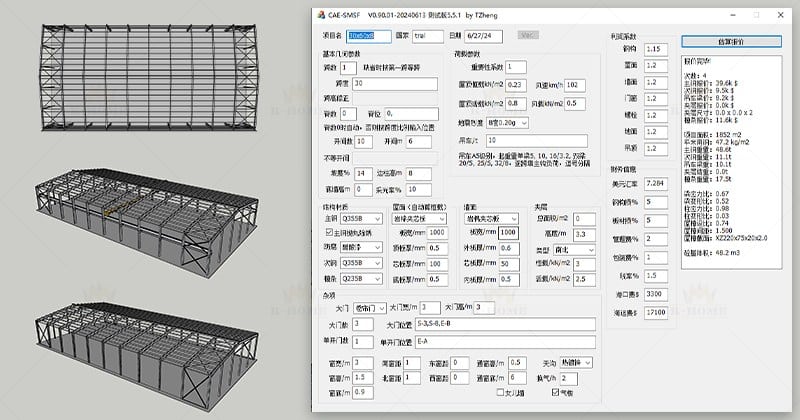
Secure Building Joint Connections for Multi-Span Structures
Joints are the “critical link” in multi-span metal buildings—inter-span connections directly influence structural stability and service life. Three key design focuses ensure reliability:
- Use dual fixation (high-strength bolts + welding) instead of single-method connections to prevent loosening over time.
- Apply additional anti-corrosion coatings to joints (prone to water/dust accumulation) to protect steel from rust and corrosion—extending the lifespan of multi-span steel structure workshops.
- Ensure smooth joint transitions with no sharp corners, avoiding local fractures under stress and maintaining the integrity of the multi-span frame for structural steel buildings.
WHY CHOOSE KHOME AS YOUR SUPPLIER?
K-HOME is one of the trusted factory manufacturers in China. From structural design to installation, our team can handle various complex projects. You will receive a prefabricated structure solution that best suits your needs.
You can send me a WhatsApp message (+86-18790630368), or send an e-mail (sales@khomechina.com) to leave your contact information. We will contact you as soon as possible.
Frequently Asked Questions About Multi Span Steel Buildings
If your question is not listed, please email us at sales@khomechina.com
Contact Us >>
Have questions or need help? Before we start, you should know that almost all prefab steel buildings are customized.
Our engineering team will design it according to local wind speed, rain load, length*width*height, and other additional options. Or, we could follow your drawings. Please tell me your requirement, and we will do the rest!
Use the form to reach out and we will be in touch with you as quickly as possible.