
Flexible & Quality Prefabricated Steel Retail Building
Flexible & Quality Prefabricated Steel Retail Building: Efficient Construction, Adaptive Spaces for Every Retail Format
Beyond the Basics Into What Prefabricated Steel Retail Buildings Are
A Prefabricated Steel Retail Building is purpose-designed for retail operations, with core components—steel frames, wall panels, and structural supports—precision-manufactured in factories through standardized processes before being shipped to construction sites for assembly.
Unlike traditional construction, this prefabricated retail solution undergoes engineering tweaks tailored to retail needs: it can support heavy-duty shelves, withstand high foot traffic, and enable flexible merchandise display layouts. The steel frame, as the building’s backbone, balances strength and adaptability—adjusting product lines or reconfiguring spaces to meet shifting consumer demands is straightforward, with no major renovations required.
This “factory prefabrication + on-site assembly” model eliminates many inefficiencies of on-site construction. The finished space is durable, aligns with daily retail workflows (such as inventory management and customer flow), and streamlines retail space development with greater efficiency and practicality.

What Are the Common Types of Prefabricated Steel Commercial Retail Buildings?
When selecting a prefabricated steel structure for retail use, business owners should focus on matching the steel structure type to their specific operational needs.
Differences Between Steel Structure Types for Retail Buildings
- Light steel structures: Suitable for small-scale buildings or decorations, such as light industrial workshops and portable cabins. They primarily use thin-walled section steel.
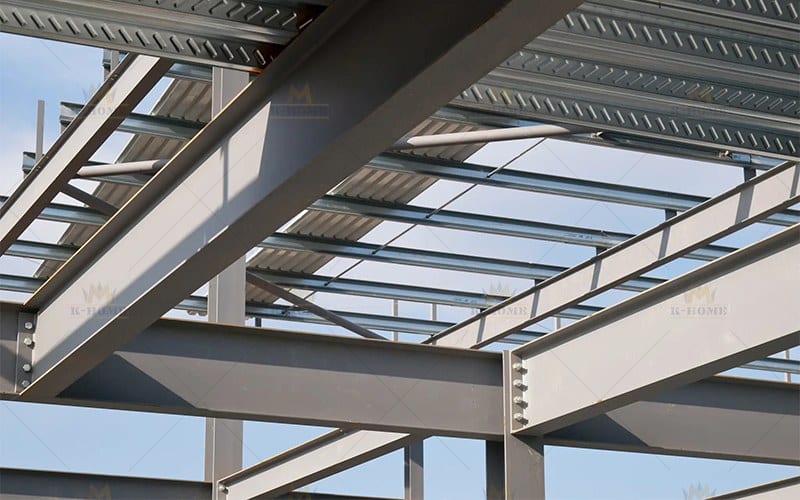
- Heavy steel structures: Applied in large industrial buildings or high-rises, such as bridges and stadiums. They rely on thick-walled section steel or H-beams.
- Spatial steel structures: Including space frame structures and cable-stayed structures, commonly used in large-span buildings like stadiums and exhibition centers.
Based on the above classifications, for small-space operations like community convenience stores and boutique shops, light steel structures are sufficient. Lightweight and easy to process, they accommodate single-story layouts with spans of 8-12 meters, making them a cost-effective choice for rapid store openings or chain expansion.
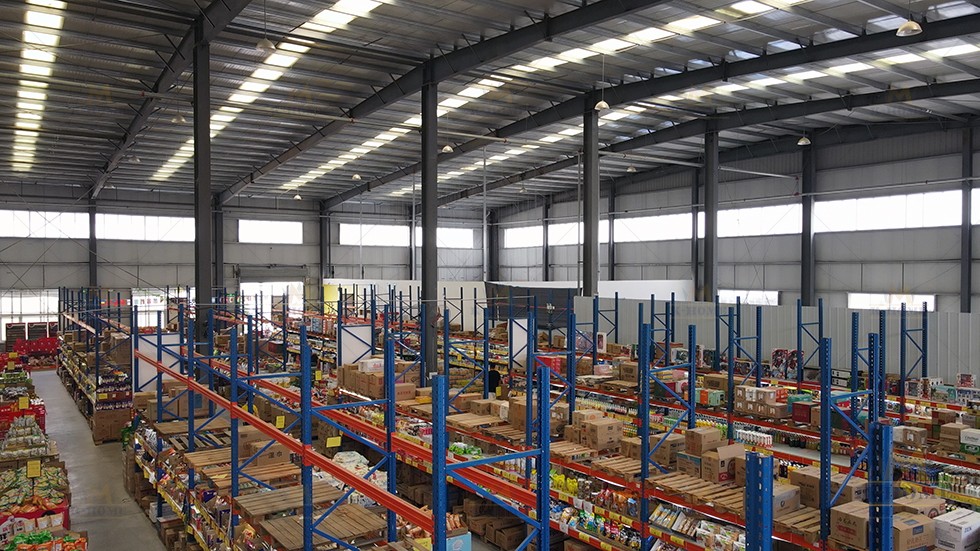
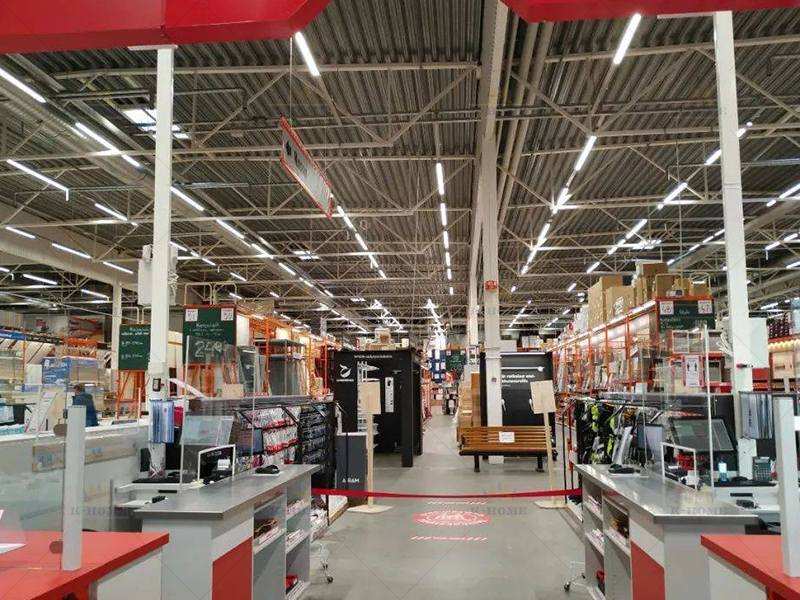
For warehouse supermarkets and large discount stores, heavy steel structures are necessary. H-beams offer superior load-bearing capacity and stability, with spans of 15-30 meters enabling column-free spaces—ideal for housing heavy-duty shelves and accommodating high foot traffic.
 Light steel structures
-
Heavy steel structures
-
Spatial steel structures


Why Should You Prefer Prefabricated Steel Structures for Retail Building Construction?
Efficient Construction: Factory-Built Steel Retail Spaces Accelerate Investors’ Launch
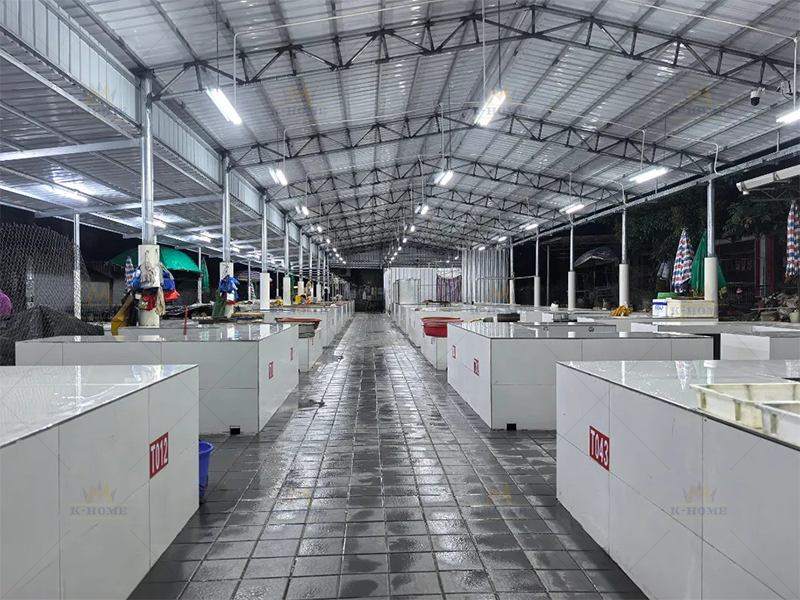
Standardized factory prefabrication and on-site construction proceed simultaneously. Core components like steel frames and wall panels are pre-manufactured in factories, allowing on-site assembly to be completed in just 2-4 weeks—cutting the construction period in half compared to traditional buildings. This feature directly addresses retail brands’ key needs for rapid chain expansion and market entry before peak seasons, reducing venue vacancy losses and extra labor costs while enabling the prefabricated steel retail space to start operations sooner.
Cost Savings: Steel Retail Buildings Deliver Greater Cost-Effectiveness
Factories use precision cutting technology to produce steel structure components, minimizing material waste by over 30% compared to traditional on-site construction. Additionally, steel boasts a recycling rate of over 90%, effectively lowering initial material procurement expenses. Prefabricated steel retail buildings themselves are corrosion-resistant and non-deformable, eliminating the need for extensive maintenance or renovations later, with annual maintenance costs only one-third of those for concrete retail buildings. From material waste control during initial construction to maintenance savings in long-term operations, prefabricated steel retail buildings achieve full-cycle cost control, perfectly aligning with the core needs of small and medium-sized retailers with limited budgets and a focus on investment value.
Spatial Flexibility: Adaptable Prefabricated Steel Retail Spaces for Evolving Formats
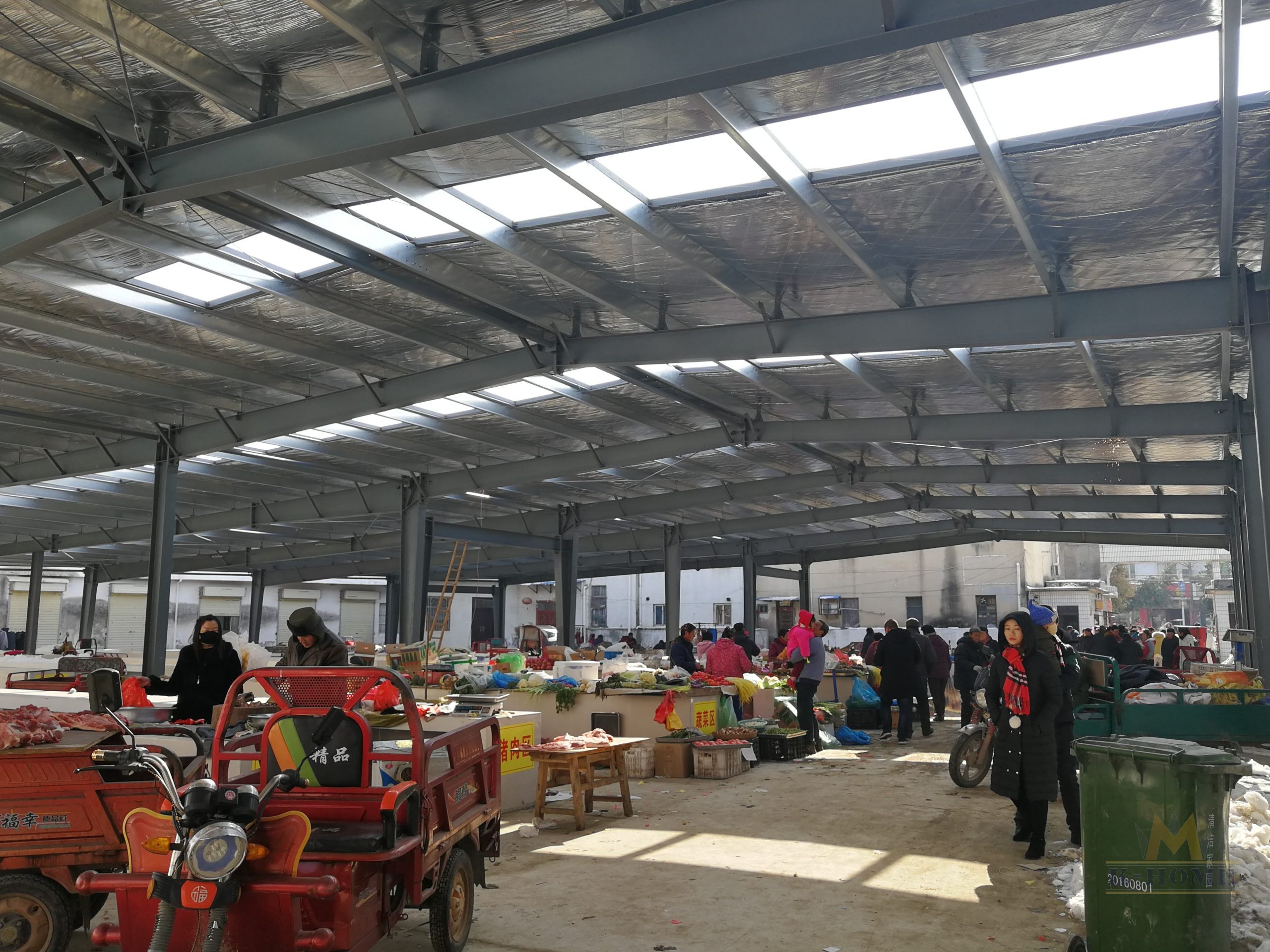
Steel frames support column-free, large-span designs ranging from 8 to 30 meters. Whether adjusting merchandise display areas, expanding floor space horizontally, or adding mezzanines for additional storage vertically, no large-scale demolition or reconstruction is required. This flexible adjustability perfectly suits the retail industry’s characteristics of rapid evolution and changing operational needs.
Design
Every designer in our team has at least 10 years of experience. You don’t have to worry about the unprofessional design affecting the safety of the building.
Mark and Transportation
In order to make you clear and reduce the site work, we meticulously mark each part with labels, and all parts will be planned in advance to reduce the number of packings for you
Manufacturing
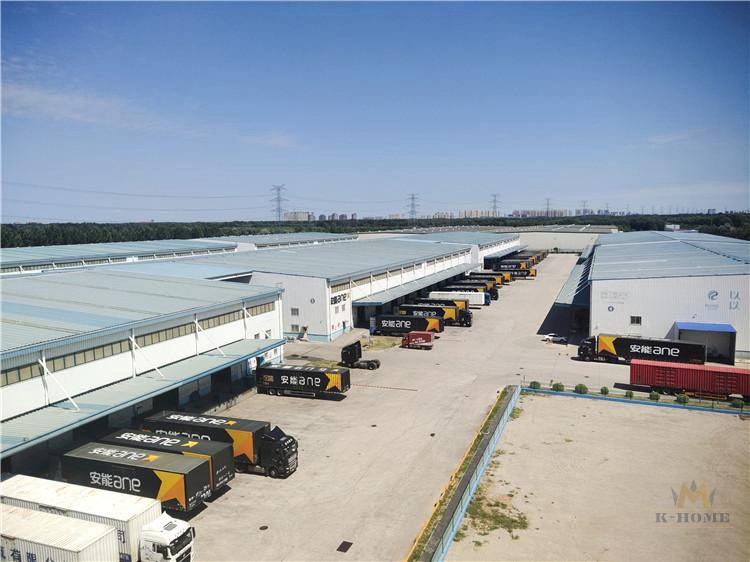
Our factory has 2 production workshops with large production capacity and short delivery time. Generally, the lead time is around 15 days.
Detailed Installation
If this is the first time for you to install the steel building, our engineer will customize a 3D installation guide for you. You don’t need to worry about the installation.
About K-HOME
——Pre Engineered steel Building Manufacturers China
Henan K-home Steel Structure Co., Ltd is located in Xinxiang, Henan Province. Established in the year 2007, registered capital of RMB 20 million, covering an area of 100,000.00 square meters with 260 employees. We are engaged in prefabricated building design, project budget, fabrication, installation of steel structure and sandwich panels with second-grade general contracting qualification.
What Are the Best Steel Material Choices for Steel Retail Stores?
Steel selection for steel retail stores doesn’t require high-grade specifications—just alignment with business scenarios.
- Main Frame Steel: Prioritize Q235B or Q355B hot-rolled section steel, with business adaptation as the core, rather than a blind pursuit of high specifications. Q235B is suitable for small stores, such as convenience stores and boutiques, offering excellent cost-effectiveness and meeting daily load-bearing requirements. For warehouse supermarkets and large-span stores, Q355B is more appropriate—its high strength optimizes component layout, creating a spacious and unobstructed indoor space.
- Enclosure System Materials: The preferred combination is color steel plates + insulated sandwich panels. The outer layer can be customized with colors matching the brand tone, while the middle rock wool or polyurethane insulation layer stabilizes indoor temperatures. This solution is particularly suitable for prefabricated steel retail buildings with clear temperature control requirements, such as supermarkets and fresh food stores.
- Key Accessory Selection: High-strength bolts ensure the firmness of component connections and support subsequent space adjustments, adapting to the iterative needs of retail formats. If the store is located in a humid or coastal area, professional anti-corrosion coatings like fluorocarbon paint and zinc-rich paint are required to effectively prolong the service life of the steel retail store.
What Is the Construction Cost of a Prefabricated Steel Retail Building
The construction cost of a prefabricated steel retail building is transparent and free of hidden fees, consisting mainly of four core components plus two secondary indirect costs that depend on project-specific details. Here’s a detailed breakdown aligned with retail construction needs:
- Steel Structure Main Body (Largest Cost Component): As the core load-bearing system of the retail building, this includes material costs for prefabricated steel beams, columns, and trusses, as well as precision processing fees (cutting, welding, rust removal, and anti-corrosion) at the factory. Steel grades like Q235B and Q355B, along with cross-sectional dimensions, directly determine the unit price, while total steel consumption dictates the overall cost scale—critical for retail investors balancing budget and structural performance.
- Foundation Engineering: Prefabricated steel retail structures demand high foundation bearing capacity, with costs covering excavation, concrete pouring, and embedded part installation. Special geological conditions (e.g., soft soil, coastal areas) directly increase construction difficulty and expenses, making foundation planning a key focus for preliminary retail project budgets.


- Enclosure System: Responsible for the retail store’s sealing, thermal insulation, and exterior aesthetics, costs include external wall panels, roof panels, doors, windows, and waterproof/insulation materials (such as rock wool and polyurethane). Material selection variations (e.g., standard vs. high-performance insulation) drive cost fluctuations, as retail businesses often prioritize both energy efficiency and brand-aligned appearances.
- On-Site Installation & Supporting Works: Includes construction fees for hoisting, splicing, and joint reinforcement by professional teams, as well as related equipment rental fees. It also encompasses installation costs for supporting facilities such as water and electricity pipelines, ventilation and fire protection systems, and floor paving.


Secondary Indirect Costs for Prefabricated Steel Retail Buildings
- Design & Testing Fees for Steel Retail Buildings: Technical service costs for structural design, construction drawing optimization, and component flaw detection, ensuring the prefabricated steel retail building meets industry compliance and structural safety standards.
- Taxes & Management Fees for Steel Retail Buildings: Industry-standard indirect costs, including material transportation tax, construction management fees, and safe and civilized construction fees—standard for prefabricated steel retail construction projects.
Looking for Fast, Affordable & Safe Commercial Retail Space? K-HOME’s Prefabricated Steel Building Is Ideal
Frequently Asked Questions for Prefabricated Steel Retail Building Projects
Contact Us >>
Have questions or need help? Before we start, you should know that almost all prefab steel buildings are customized.
Our engineering team will design it according to local wind speed, rain load, length*width*height, and other additional options. Or, we could follow your drawings. Please tell me your requirement, and we will do the rest!
Use the form to reach out and we will be in touch with you as quickly as possible.