
Easy to Understand of Prefab Shop Buildings
prefabricated steel shops buildings | Steel Retail Buildings
Prefabricated steel structures are increasingly widely used in industrial and retail sectors, thanks to the advantages of industrialized production and efficient construction. Among them, prefab shop buildings (prefabricated steel structure shops) serve as the core building type for small-scale retail scenarios, mainly undertaking the operational functions of small retail outlets such as convenience stores, clothing stores, and community service stores.
This type of shop adopts a steel structure as its load-bearing system. Its steel structure’s load-bearing components (including steel columns and steel beams) and enclosure components (such as wall panels and roof panels) are all manufactured in factories through standardized production, in accordance with the design parameters. After passing quality inspection, these components are transported to the project site, and finally, on-site assembly is completed via bolt connection to form a complete modular steel shop building.


Prefab Shop Buildings: Core Structural Composition
A prefab shop building is an industrial and commercial structure constructed through factory prefabrication and on-site assembly. Its main structure consists of steel structure components and an enclosure system.
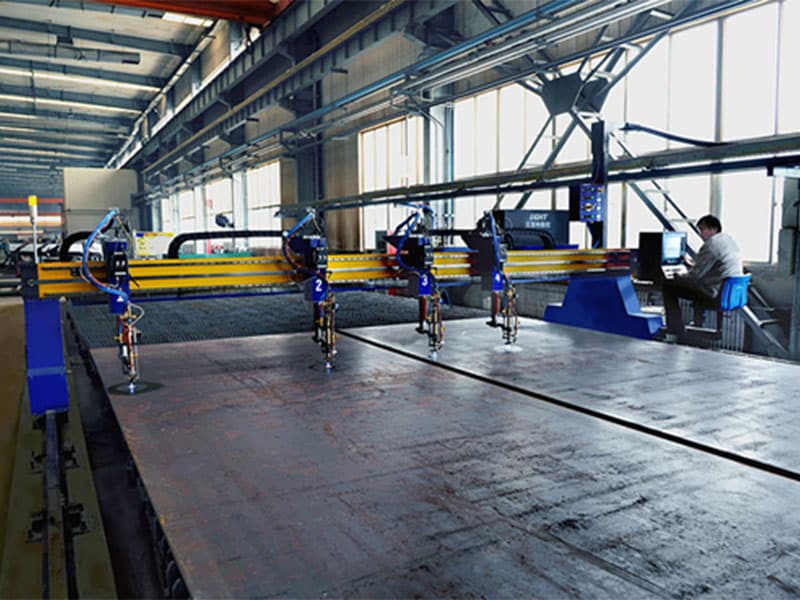
The main load-bearing structure includes H-shaped steel beams and columns, as well as C-shaped steel purlins. These components are processed and shaped in factories using precision techniques such as CNC cutting and submerged arc welding. During production, they also undergo sandblasting for rust removal, galvanizing, or anti-corrosion coating to ensure durability.
The enclosure system mostly uses color steel panels, rock wool sandwich panels, or EPS sandwich panels, with materials selected based on the functional needs of the prefabricated steel structure shop.
After production, all components must undergo dimensional accuracy inspection and ultrasonic testing for welding quality. Once qualified, they are packaged, transported to the site, and assembled using high-strength bolt connections or local welding to form the complete prefab shop building.
 Structural Steel Straightening
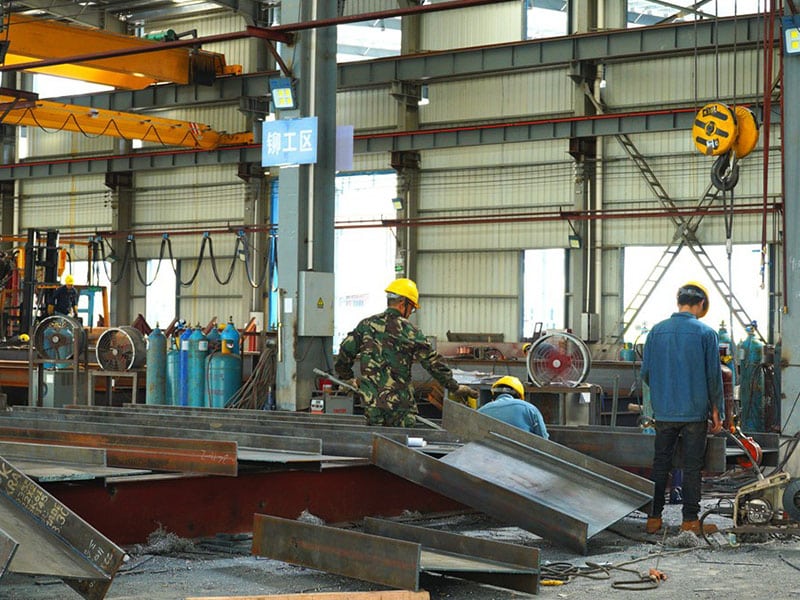 Structural Steel Fitting
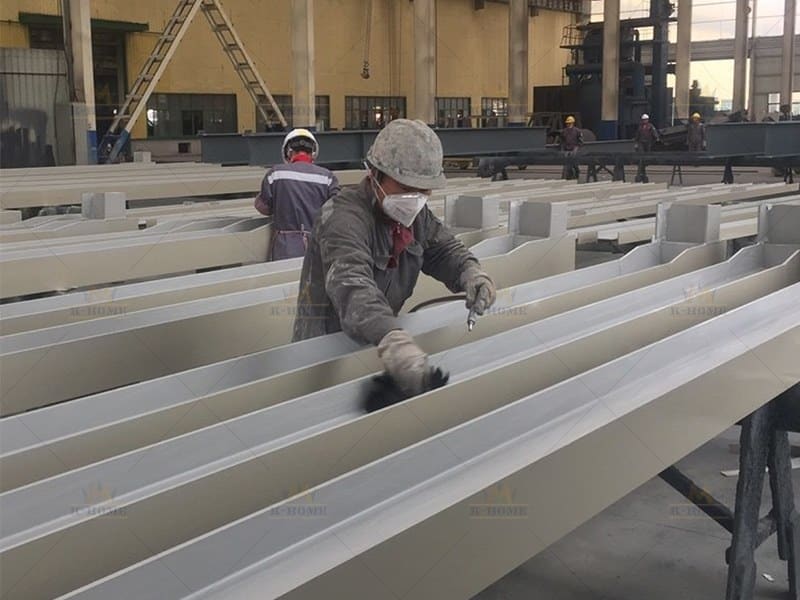 Anti-Rust Method for Steel Structure Painting
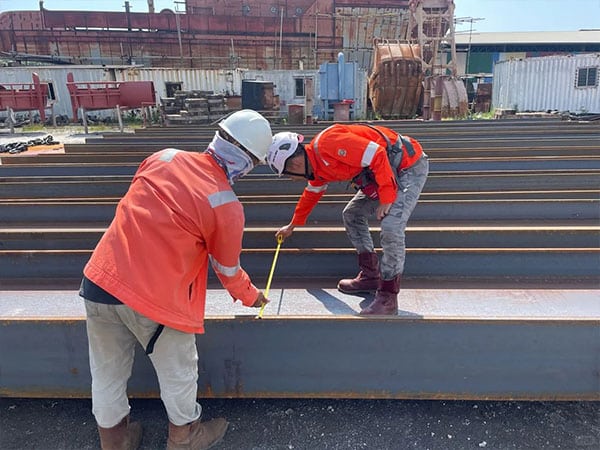 Construction of Prefab Shop Buildings
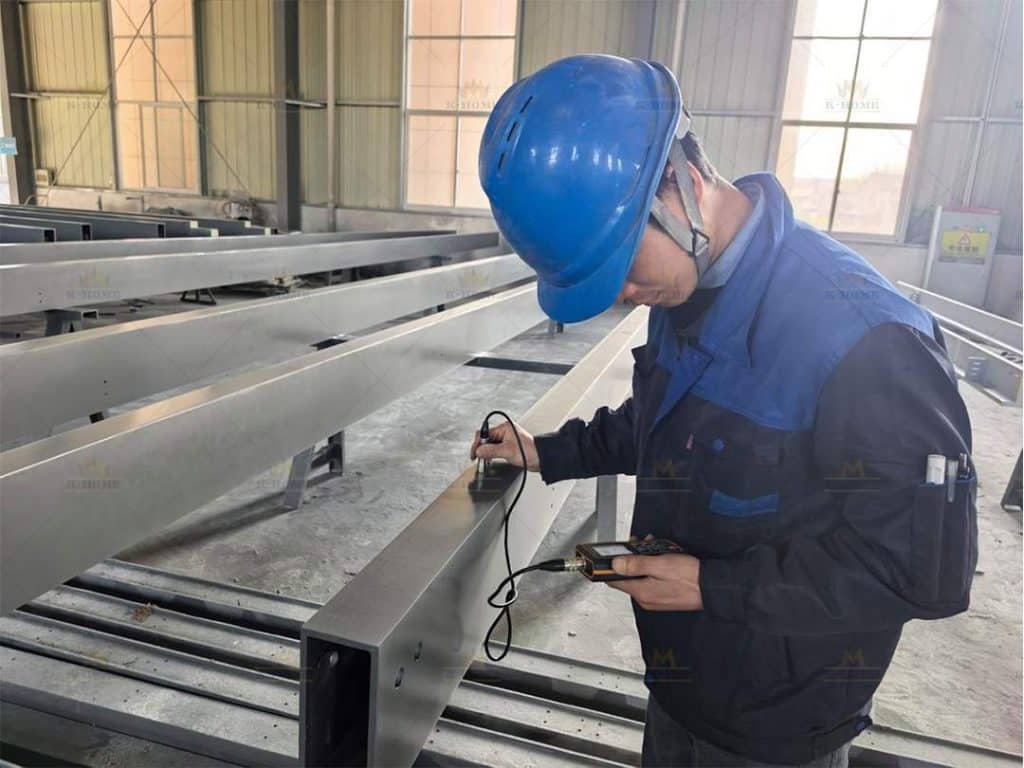 Quality Control Inspection of Steel Structures


WHY CHOOSE KHOME AS YOUR SUPPLIER?
K-HOME is one of the trusted factory manufacturers in China. From structural design to installation, our team can handle various complex projects. You will receive a prefabricated structure solution that best suits your needs.
You can send me a WhatsApp message (+86-18338952063), or send an email to leave your contact information. We will contact you as soon as possible.
Clear Differences Between Prefab Shop Buildings and Prefab Steel Structure Supermarkets
The core differences between prefab shop buildings (prefabricated steel structure shops) and prefabricated steel structure supermarkets lie in three dimensions: load design, span planning, and spatial flexibility. These differences are determined by the functional needs of the two in actual commercial applications and directly affect steel structure design and construction.
Steel Structure Load Design Differences Between Prefab Shop Buildings and Prefab Steel Structure Supermarkets
Prefab shop buildings have low load requirements. Internally, they mainly feature lightweight shelves (with a load-bearing capacity of 50-200kg per layer) and small display cabinets. The load for personnel is designed at 2.5kN/㎡. Therefore, the specifications of steel structure components for prefab shop buildings are relatively small, using Q235 ordinary strength steel, with no need for additional reinforced joints.
Prefabricated steel structure supermarkets have high load requirements. They contain heavy-duty shelves and large refrigeration equipment such as insulated freezers, and also need to bear dense pedestrian loads of 3kN/㎡. As a result, their components have larger specifications, using Q345 high-strength steel. Key joints, such as those under freezer equipment, require reinforcing plates or additional supports to ensure structural safety.

Span Planning Differences Between Prefab Shop Buildings and Prefabricated Steel Structure Supermarkets
Prefabricated shop buildings typically have an operating area of 50~200㎡ and need to be divided into multiple functional zones (such as shelf areas, checkout areas, and storage areas). Their spans are mainly 4~6 meters, with column spacing of 3~4 meters. This compact design for prefab shop buildings increases the number of columns to enhance structural stability, facilitates space division with partitions, and allows for easy transportation of small-span components—on-site assembly only requires auxiliary equipment like small forklifts.

Prefabricated steel structure supermarkets usually have an operating area of over 500㎡. They need to facilitate the passage of shopping carts and avoid columns blocking shelves, so their spans are mainly 8~12 meters, with column spacing of 6~8 meters. To achieve large spans, truss-type steel beams or thickened H-shaped steel are used, reducing the number of columns (only 1 column per 80~100㎡). This design ensures no obstructions in main passages and shelf areas, while also accommodating the overall placement of large cold-chain equipment.
Spatial Flexibility Differences Between Prefab Shop Buildings and Prefabricated Steel Structure Supermarket
Prefab shop buildings see mostly minor post-layout adjustments—like swapping shelf styles or repositioning checkout counters—with no need to modify the steel structure.
Their support systems are simply designed: beams have a few reserved bolt holes for fixing partitions, and enclosure panels attach via fixed bolts. Renovations only require partial cutting of panels, leaving the steel frame of these modular retail units untouched.
Prefabricated steel structure supermarkets often need bigger later changes: replacing shelves, adding refrigeration, or installing food processing equipment.
Thus, their steel structures pre-reserve adjustment space—load-bearing hanging points (for lamps/billboards) and ground bolt holes to secure equipment. These designs avoid structural damage from later drilling, easing functional zone tweaks (e.g., expanding fresh areas) in large prefab retail structures.

Explore Suitable Scenarios for Prefab Shop Buildings

Convenience Store – Type Prefab Shop Buildings
This type of prefab shop building focuses on fast-moving consumer goods sales (snacks, beverages, daily necessities), designed for “light load” and “convenient traffic flow.

Clothing Retail – Type Prefab Shop Buildings
This type of prefabricated steel shop building sells clothing and shoes, designed for “spatial aesthetics” and “flexible layout, using lightweight steel beams and steel columns.

Community Service – Type Prefab Shop Buildings
This type of prefab steel shop covers pharmacies or small fresh food shops (no large cold chains), designed to balance “basic function” and “low cost,
Efficient Construction Timeline and Delivery of Prefab Shop Buildings
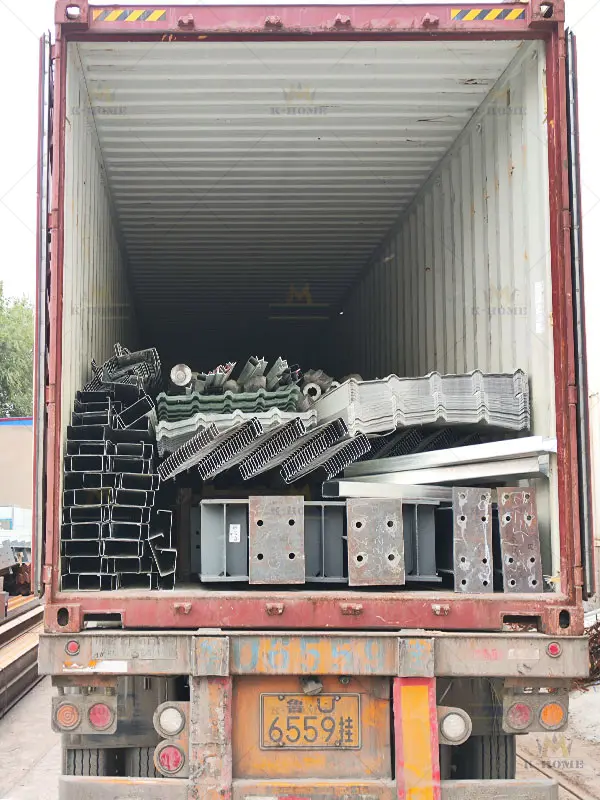
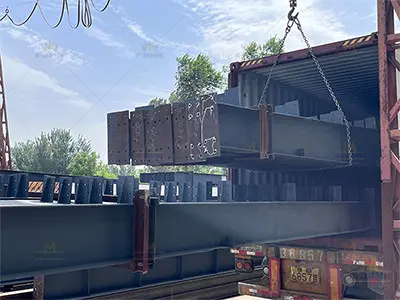
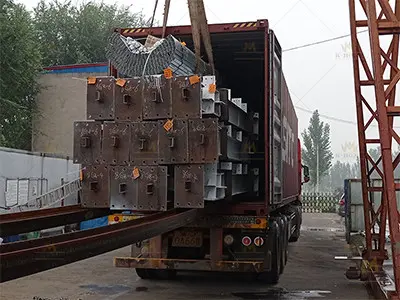
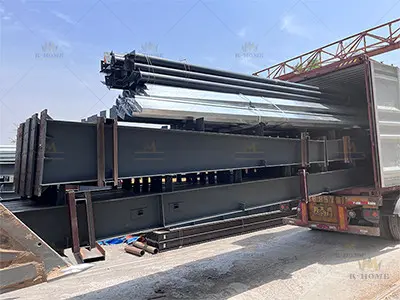
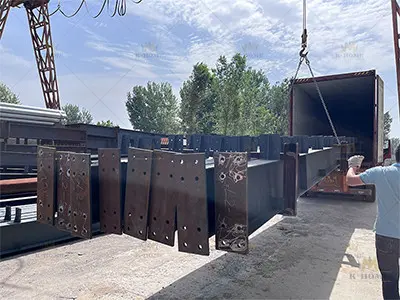
The construction timeline of prefab shop buildings (also known as prefabricated steel structure retail shops) is barely affected by area, with a stable overall duration. For 50-80㎡ prefab retail shops, the period from modular steel shop components production to on-site delivery is about 2 weeks. For 80-200㎡ prefabricated steel structure retail shops, it takes roughly 2-3 weeks—the only difference is that larger shops need an extra 1-2 days for enclosure panel installation.
Compared with traditional brick-and-concrete retail shops, the construction timeline of prefab shop buildings is cut by over 50%, helping clients start operations faster. Key links (component production, transportation, on-site assembly) are streamlined through standardized processes to ensure the construction timeline of prefab shops is manageable, and all construction progress is documented for clients to check anytime.
About K-HOME
——Pre Engineered steel Building Manufacturers China
Henan K-home Steel Structure Co., Ltd is located in Xinxiang, Henan Province. Established in the year 2007, registered capital of RMB 20 million, covering an area of 100,000.00 square meters with 260 employees. We are engaged in prefabricated building design, project budget, fabrication, installation of steel structure and sandwich panels with second-grade general contracting qualification.
Design
Every designer in our team has at least 10 years of experience. You don’t have to worry about the unprofessional design affecting the safety of the building.
Mark and Transportation
In order to make you clear and reduce the site work, we meticulously mark each part with labels, and all parts will be planned in advance to reduce the number of packings for you
Manufacturing
Our factory has 2 production workshops with large production capacity and short delivery time. Generally, the lead time is around 15 days.
Detailed Installation
If this is the first time for you to install the steel building, our engineer will customize a 3D installation guide for you. You don’t need to worry about the installation.
FAQs About Prefab Shop Buildings
related blog
What’s Steel Structure Warehouse? Design & Cost
What’s Steel Structure Warehouse Building? Engineering facilities built using prefabricated steel components—most frequently H-beams—are known as steel structure warehouse. These structural solutions are particularly engineered to bear massive loads while…the Core Basics of Steel Structure Crane Beam You Need to Know
In industrial buildings, manufacturing plants, and large-scale warehousing facilities, the steel structure crane beam serves as a key component of heavy-load handling systems. It directly dictates the operational safety and…Critical Basics of Steel Structure Connection Designs You Should Know
Understanding the Role of Steel Structure Connections Steel structure connections are an important technical means to ensure structural integrity and safety. By firmly connecting various components of steel buildings, they…Structural Steel Fabrication: Processes, Considerations, and Advantages
What is Structural Steel Fabrication? Structural steel fabrication refers to the process of cutting, shaping, assembling, and welding steel components into structural frameworks that meet precise engineering requirements. It bridges…


Contact Us >>
Have questions or need help? Before we start, you should know that almost all prefab steel buildings are customized.
Our engineering team will design it according to local wind speed, rain load, length*width*height, and other additional options. Or, we could follow your drawings. Please tell me your requirement, and we will do the rest!
Use the form to reach out and we will be in touch with you as quickly as possible.