
How to Steel Structural Parts Production?
The production of steel structural components is a rigorous, systematic process. It typically begins with project preparation and raw material inspection, followed by layout and marking to establish dimensions. The components are then shaped through cutting, machining, assembly, and welding, and finally undergo anti-corrosion coating and factory inspection. Each stage is closely interlinked to ensure that the finished components meet design specifications and safety standards.
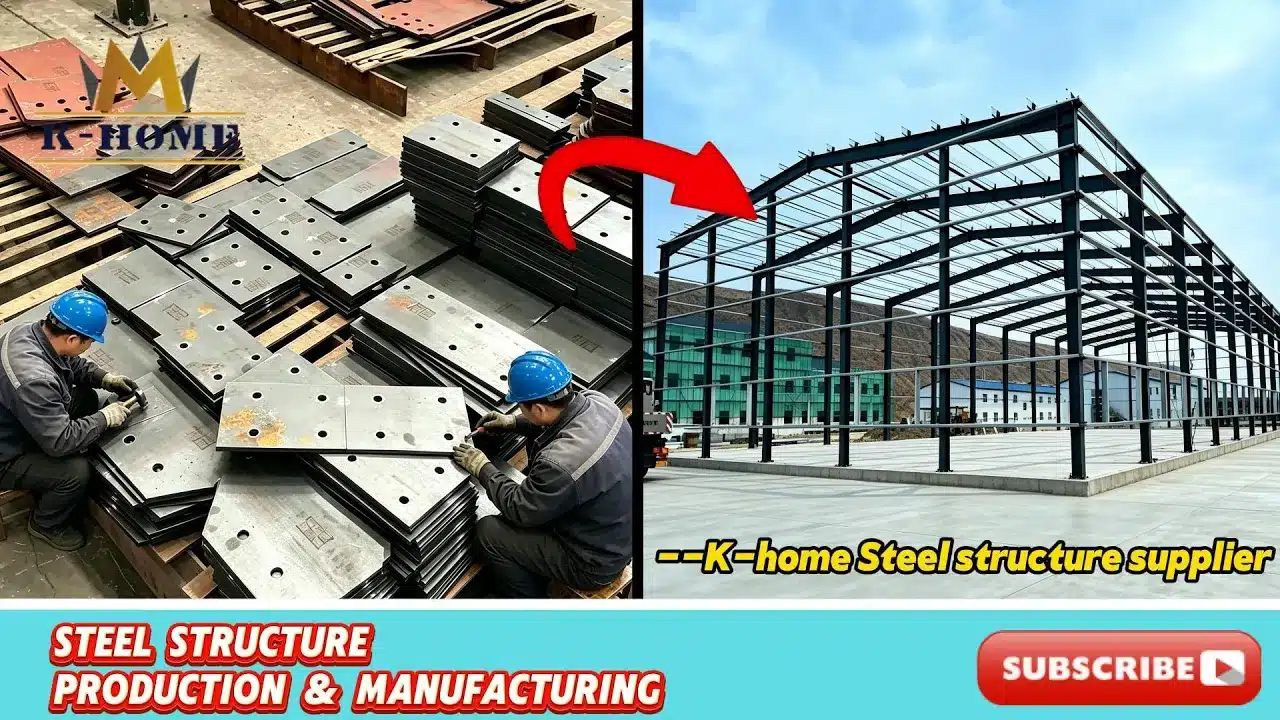
Production Process Of Steel Structure Components
The safety and durability of steel structure buildings depend on the manufacturing quality of each individual steel component. Any dimensional deviation or welding defect can compromise the safety of the entire structure.
Therefore, the production of steel components must strictly adhere to the building standards of the project location. Every step—from raw materials to the finished product—must be precisely controlled, with quality management integrated throughout the entire process to ensure defects are promptly eliminated.
Khome has established a rigorous quality management system; we oversee every stage of production with meticulous care to guarantee the quality of each component and ensure the safety of the entire building.
1. Incoming Material Inspection
Before production begins, steel must be purchased from reputable mills. Upon arrival, it shall undergo strict inspection of chemical composition and mechanical properties (such as yield strength and tensile strength). Only materials that pass all tests are allowed to be accepted into inventory and put into use.
KHOME insists on long-term strategic cooperation with reputable steel mills. We also enforce incoming material inspection standards. These standards are even stricter than national requirements.
2. Stakeout
- Stakeout: Draw full-scale (1:1) patterns on the layout table, verify drawing dimensions and hole spacings, making templates and sample rods for cutting, bending, milling, planing, hole making, etc., for subsequent processing.
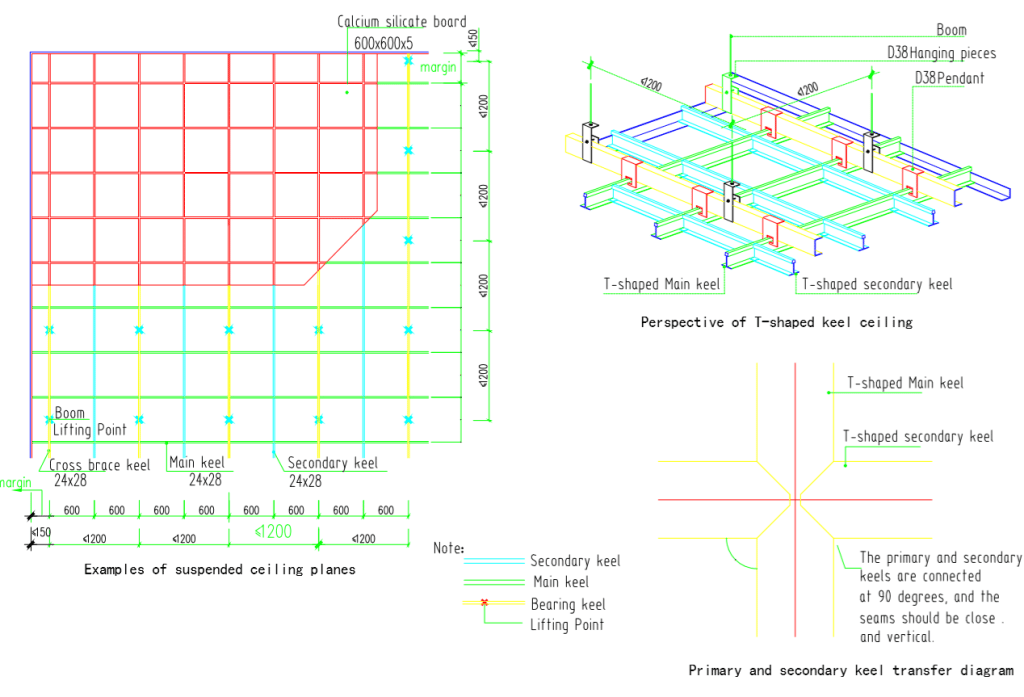
3. Draw Lines
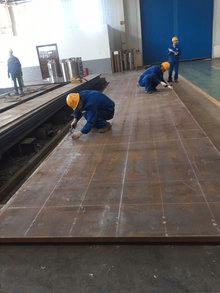
Including checking and checking the material, marking the cutting, milling, planing, hole-making and other processing positions on the material, punching holes, marking the part number, etc. Material determination should pay attention to the following issues:
- According to the ingredient list and the template, the sets are cut to save materials as much as possible.
- It should be conducive to cutting and ensure the quality of parts.
- When the process has regulations, the materials should be taken according to the regulations.
4. Blanking and Cutting
Materials are cut according to drawing specifications. Different cutting equipment is used for different needs. This ensures that all parts meet precise dimensional requirements.
Common cutting methods include the following:
- Flame cutting. This is suitable for thick plates.
- Plasma cutting. It offers fast speed and high precision.
- Laser cutting. It provides the highest precision but comes at a higher cost.
After cutting, all slag and burrs must be removed. This step ensures clean and ready-to-use workpieces.
Cutting not only separates the basic profile of the part but often simultaneously machines the weld bevel, preparing it for subsequent assembly.


5. Hole Making and Edge Processing
Hole making and edge processing further define the connection characteristics of steel components.
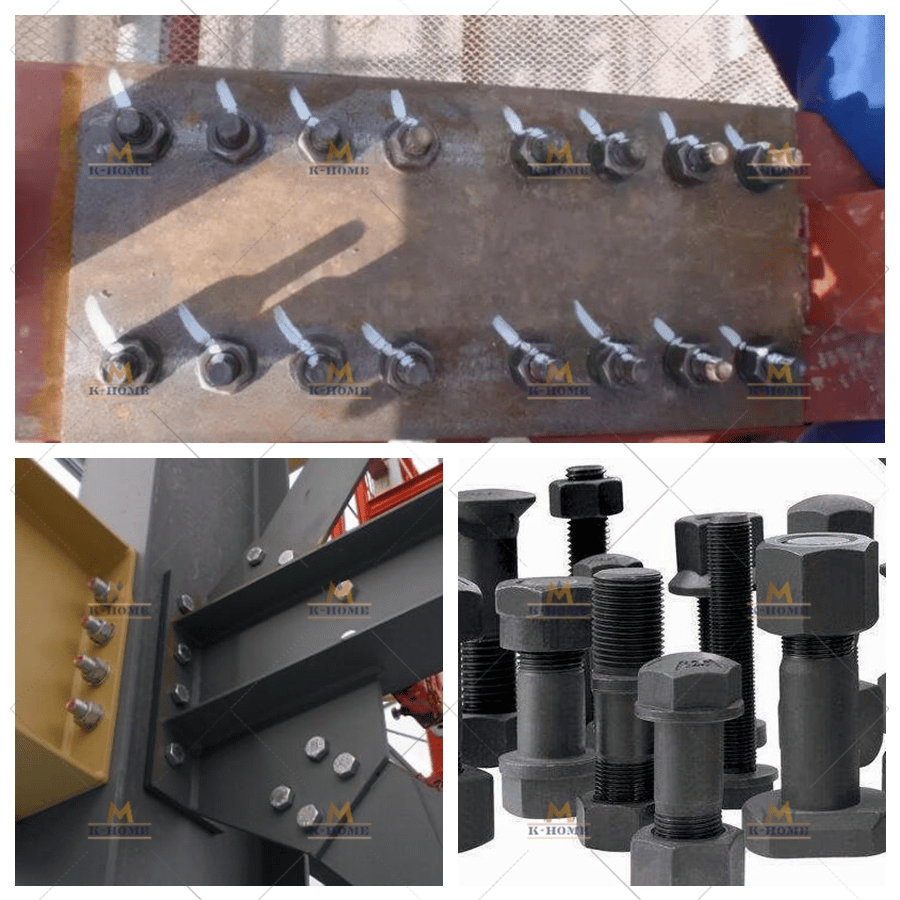
High-strength bolted connections are a primary method for joining steel structures. So, the precision of bolt holes directly impacts installation quality. Utilizing CNC drilling machines or 3D drilling machines ensures positional accuracy across hole patterns.
Edge processing involves milling or grinding away any hardened layers or minor defects resulting from the cutting process, thereby ensuring the quality of welded joints.
6. Steel Structure Components Assembly
The assembly of steel structural components refers to the process of joining cut steel plates, profiles, and other parts—using tack welding or connecting elements—to form integral structural members (such as H-beams, columns, and girders).
Methods include ground sampling method, copy copy assembly method, vertical assembly method, tire mold assembly method, etc.
This process is carried out on specialized assembly platforms or jigs, utilizing positioning blocks, clamps, and measuring tools to ensure the precise relative positioning of the parts. At this stage, the steel components are secured only by temporary tack welds in preparation for final welding.


7. Welding
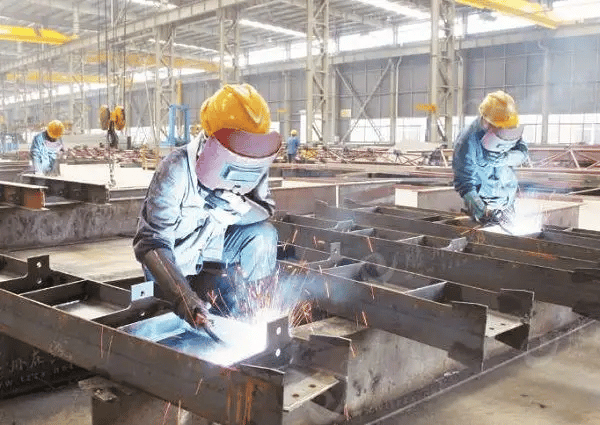
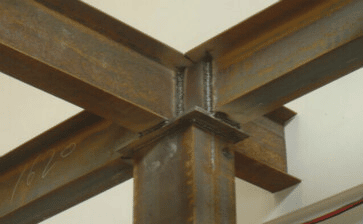
Welding is a critical process in the fabrication of steel structural components. It imparts the final structural integrity to the members. Commonly used methods include manual arc welding, gas-shielded welding, and submerged arc welding. Preheating is required before welding, and post-weld heat treatment is necessary to relieve stress;
At its core, welding involves the localized melting and re-solidification of metal; this process inevitably entails thermal expansion and contraction, leading to welding deformation. Controlling deformation is the primary task at this stage, and methods such as symmetrical welding sequences, pre-setting for reverse deformation, and rigid fixturing are used to keep deformation within permissible limits.


8. Straightening
Post-welding straightening is essential. Any bending or distortion resulting from the welding process is corrected using mechanical methods (such as a hydraulic press) or localized flame heating.
Following straightening, key dimensions must be re-verified, and the welds subjected to visual inspection and non-destructive testing (such as ultrasonic and magnetic particle testing) in accordance with specifications to confirm that both internal quality and external profile meet the required standards.


9. Treatment Of The Friction Surface
Shot blasting of steel components is a surface treatment process primarily used to remove impurities—such as mill scale, rust, and welding slag—from the surface, while simultaneously increasing surface roughness to enhance the adhesion of subsequent coatings.
Surface pretreatment: Abrasive blasting to Sa 2.5 grade (anchor profile depth of 40–80 μm), with additional grinding within 20 mm of welded areas.


10. Coating
After undergoing final dimensional and shape inspections, the steel components proceed to the coating stage.
Coating is not merely a simple matter of applying paint; it is a systematic protective process.
The process begins with a secondary surface cleaning of the steel components, followed by the application of an anti-rust primer.
Primers are typically zinc-rich or based on an epoxy zinc-rich system, preventing corrosion of the substrate through cathodic protection or a barrier effect. An intermediate coat increases the total coating thickness and enhances the barrier effect, while the topcoat provides weather resistance and the desired color.


Further Reading: Steel Structure Installation & Design
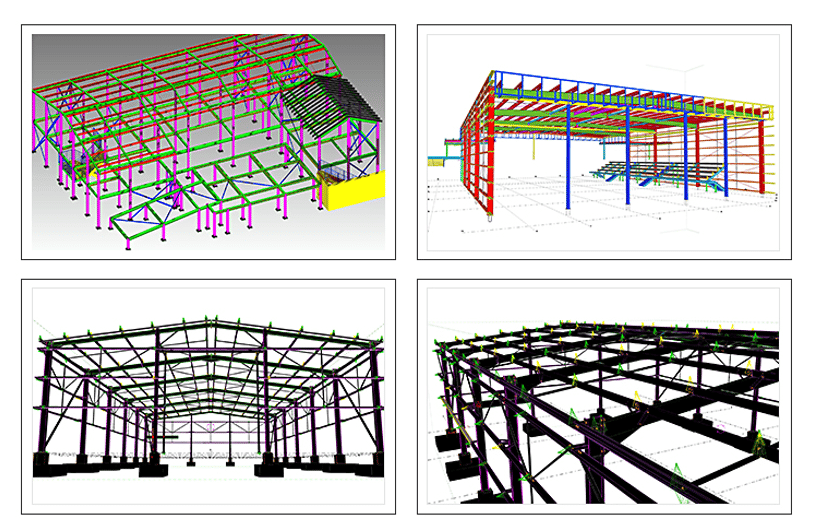
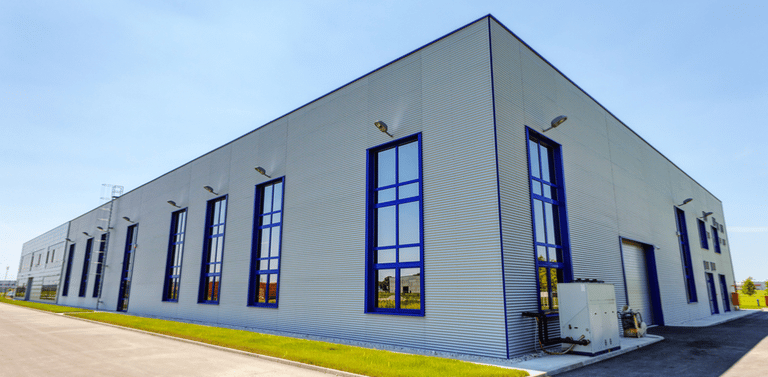
The PEB Steel Building
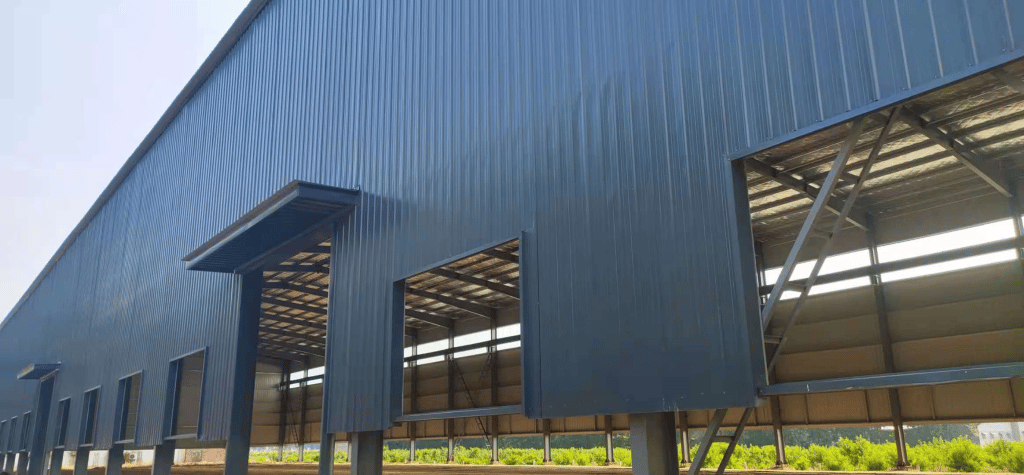
The Other Additional Attachments

Building FAQs
- How to Design Steel Building Components & Parts
- How Much Does a Steel Building Cost
- Pre-Construction Services
- What is a Steel Portal Framed Construction
- How to Read Structural Steel Drawings
Blogs Selected for You
- The Main Factors Affecting The Cost of Steel Structure Warehouse
- How Steel Buildings Help Reduce Environmental Impact
- How to Read Structural Steel Drawings
- Are Metal Buildings Cheaper Than Wood Buildings?
- Benefits of Metal Buildings For Agricultural Use
- Choosing the Right Location For Your Metal Building
- Making a Prefab Steel Church
- Passive Housing & Metal –Made for Each Other
- Uses for Metal Structures You May Not Have Known
- Why Do You Need a Prefabricated Home
- What Do You Need To Know Before Designing a Steel Structure Workshop?
- Why Should You Choose a Steel Frame Home Over a Wooden Frame Home
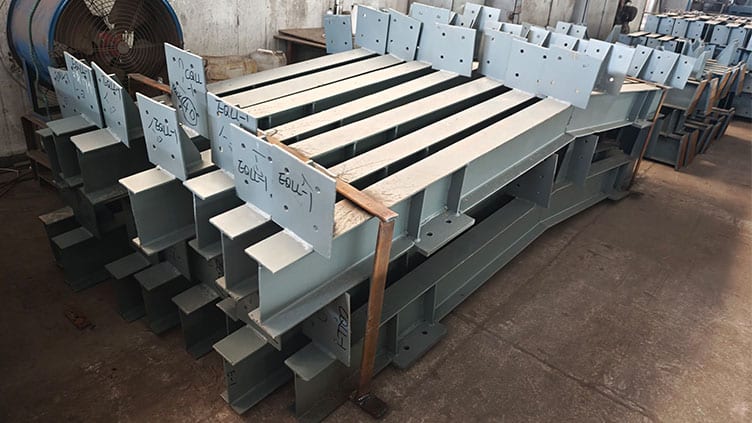
Once all manufacturing processes are complete, the components enter the pre-shipment preparation stage, which includes:
- Clearly and securely marking component identification numbers to facilitate on-site identification and lifting.
- Welding temporary lifting lugs or connection plates at designated locations in accordance with the transportation and installation plan.
- Performing thorough cleaning and packaging to prevent coating damage or contamination during transit.
At this point, a fully functional steel structural component, clearly identified and ready for on-site installation, is officially complete.


About K-HOME
——Pre Engineered Metal Building Manufacturers China
Henan K-home Steel Structure Co., Ltd is located in Xinxiang, Henan Province. Established in the year 2007, registered capital of RMB 20 million, covering an area of 100,000.00 square meters with 260 employees. We are engaged in prefabricated building design, project budget, fabrication, installation of steel structure and sandwich panels with second-grade general contracting qualification.
Custom size
We offer customized prefabricated steel structures in any size, perfectly matching your multiple requirements.
free design
We provide free professional CAD design. You don’t need to worry about unprofessional design affecting building safety.
Manufacturing
We select high-quality steel materials and use advanced processing techniques to ensure the creation of durable and robust steel structure buildings.
installation
our engineers will customize a 3D installation guide for you. You don’t need to worry about installation problems.
customized steel structure buildings according to your application
K-HOME’s prefabricated steel structure buildings have been successfully implemented in numerous countries and regions worldwide, including African markets such as Mozambique, Guyana, Tanzania, Kenya, and Ghana; the Americas such as the Bahamas and Mexico; and Asian countries such as the Philippines and Malaysia. We are familiar with diverse climate conditions and approval systems, enabling us to provide you with steel structure solutions that combine safety, durability, and economy.
Contact our customer service team today, and we will dedicate ourselves to creating a customized steel structure building perfectly suited to your needs.
If you provide the following information, we will provide you with a more accurate product quote.
why K-HOME Steel building?
As a professional PEB manufacturer, K-HOME is committed to providing you with high-quality, economical prefabricated steel structure buildings.
Committed to Creative Problem Solving
We tailor each building to your needs with the most professional, efficient and economical design.
Buy direct from the manufacturer
Steel structure buildings come from the source factory, carefully selected high-quality materials to ensure quality and durability. Factory direct delivery allows you to get prefabricated steel structure buildings at the best price.
Customer-centric service concept
We always work with customers with a people-oriented concept to understand not only what they want to build, but also what they want to achieve.
1000+
Delivered structure
60+
countries
15+
Experiences

Contact Us >>
Have questions or need help? Before we start, you should know that almost all prefab steel buildings are customized.
Our engineering team will design it according to local wind speed, rain load, length*width*height, and other additional options. Or, we could follow your drawings. Please tell me your requirement, and we will do the rest!
Use the form to reach out and we will be in touch with you as quickly as possible.
About Author: K-HOME
K-home Steel Structure Co., Ltd covers an area of 120,000 square meters. We are engaged in the design, project budget, fabrication, and installation of PEB steel structures and sandwich panels with second-grade general contracting qualifications. Our products cover light steel structures, PEB buildings, low-cost prefab houses, container houses, C/Z steel, various models of color steel plate, PU sandwich panels, eps sandwich panels, rock wool sandwich panels, cold room panels, purification plates, and other construction materials.