Steel Structure Buildings
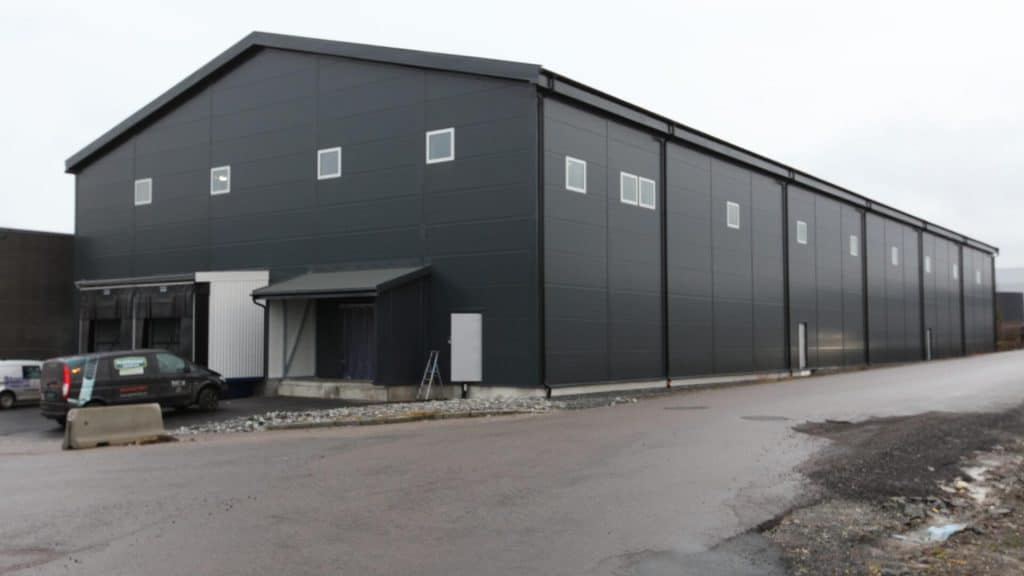
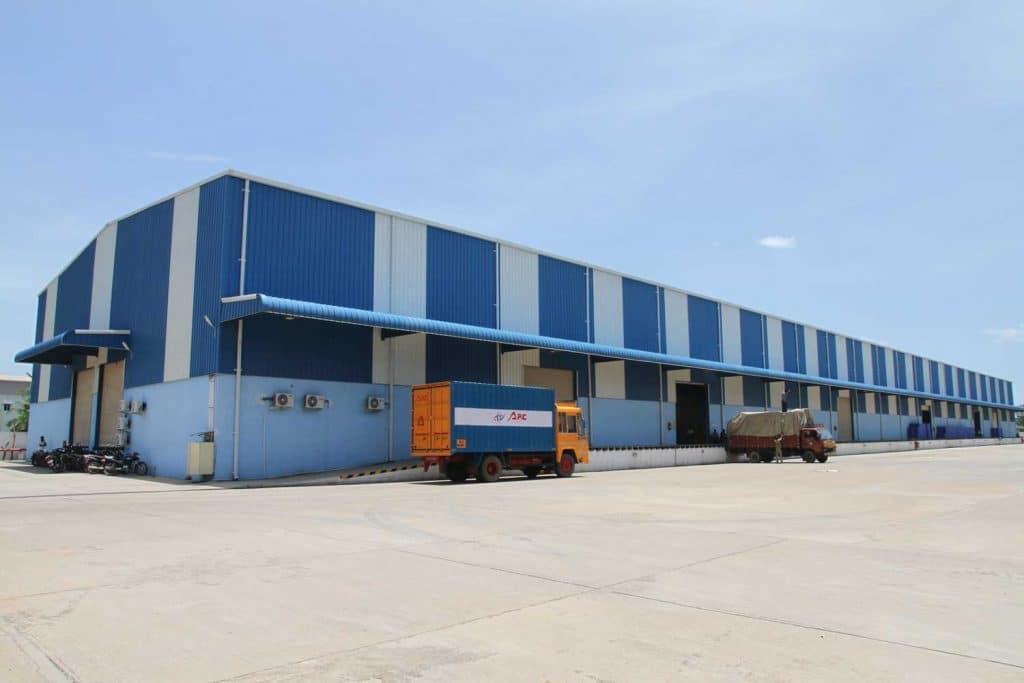
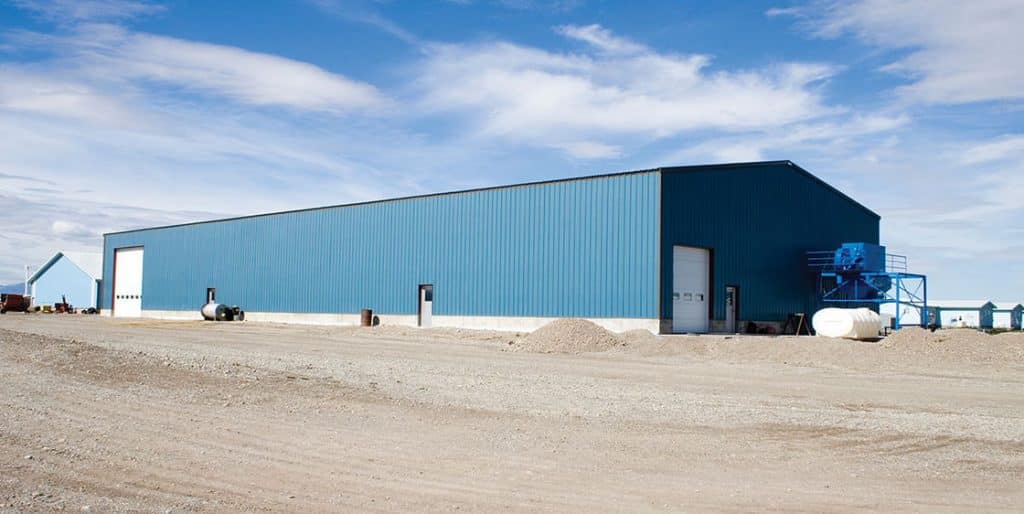
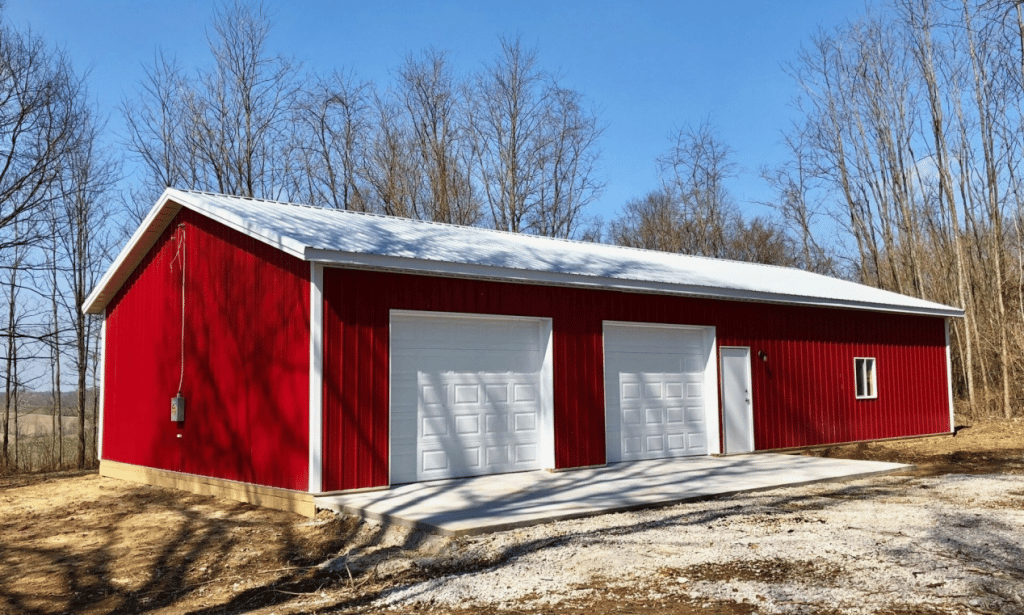
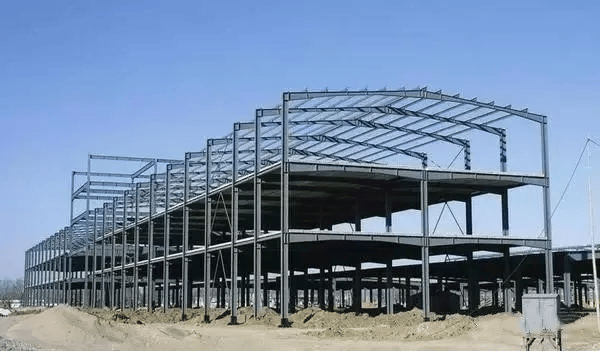
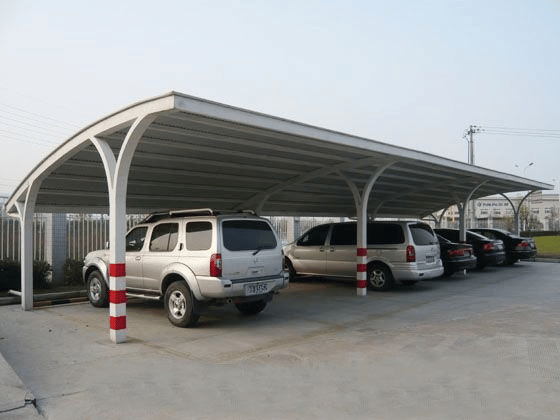
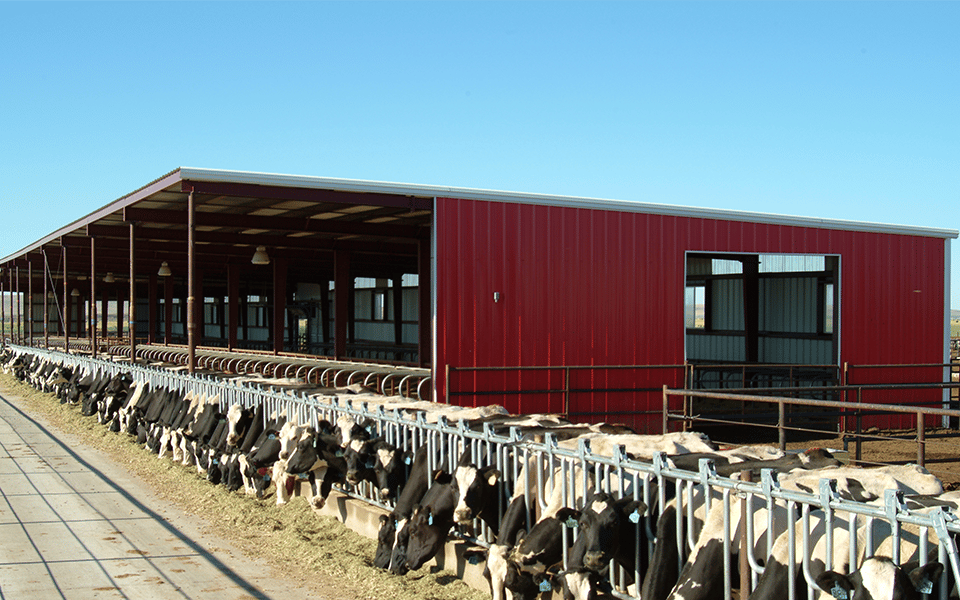
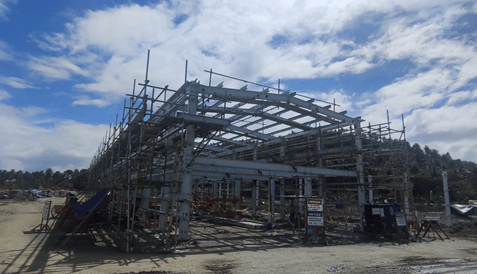
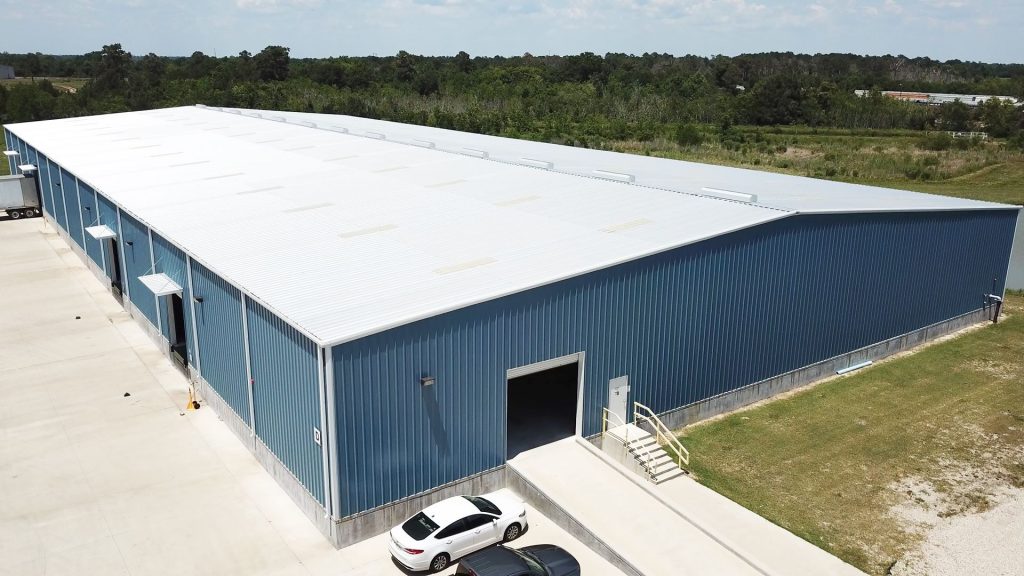
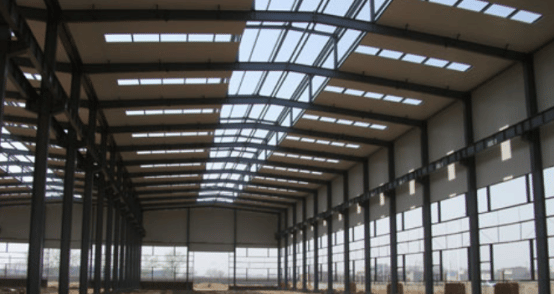
The Steel structure buildings are buildings in which steel constitutes a load-bearing structure. The load-bearing structure is usually composed of beams, columns, trusses, and other components made of section steel and steel plates. It forms an integral part of the building together with the envelope structure, such as the roof, floor, and wall.
Construction steel usually refers to hot-rolled angle steel, channel steel, I-beam, H-beam, and steel pipe. A building whose components constitute a load-bearing structure is called a steel structure building. In addition, thin-walled sections such as L-shaped, U-shaped, Z-shaped, and tube-shaped, which are cold-rolled and formed from thin steel sheets, rolled or unrolled, as well as the load-bearing components formed by them, and small steel materials such as angle steel and steel bar, etc. Structural building, generally called a light steel structure building. There are also suspension structure buildings using steel cables, which are also steel structure buildings.
The strength and elastic modulus of steel are high, the material is uniform, and the steel structure building has good plasticity and toughness, high precision, convenient installation, a high degree of industrialization, and fast construction, but it has poor corrosion resistance and fire resistance and requires frequent maintenance.
Structural Composition of Steel Building Systems
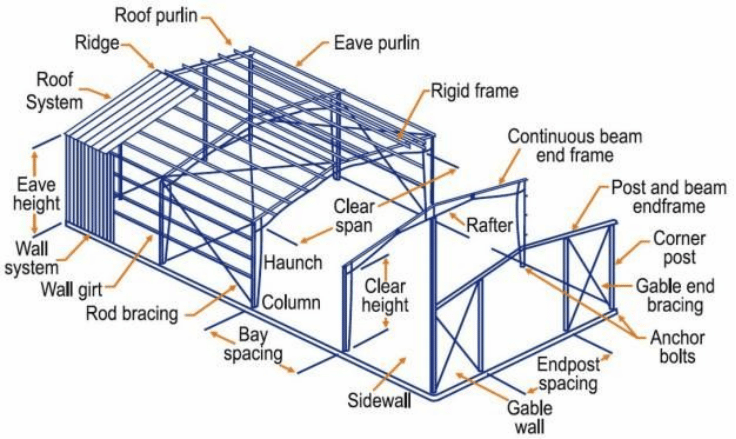
A complete steel structure building is not composed only of steel columns and steel beams. It is an integrated building system that includes the main steel frame, secondary steel members, bracing system, roof and wall enclosure, connection parts, drainage system, doors, and windows.
The main steel frame carries the structural loads of the building, while the enclosure system affects rain protection, insulation, ventilation, and daily operation. For industrial and commercial projects, these components should be considered as a complete system during the design stage.
Main Steel Frame System of Steel Structure Buildings
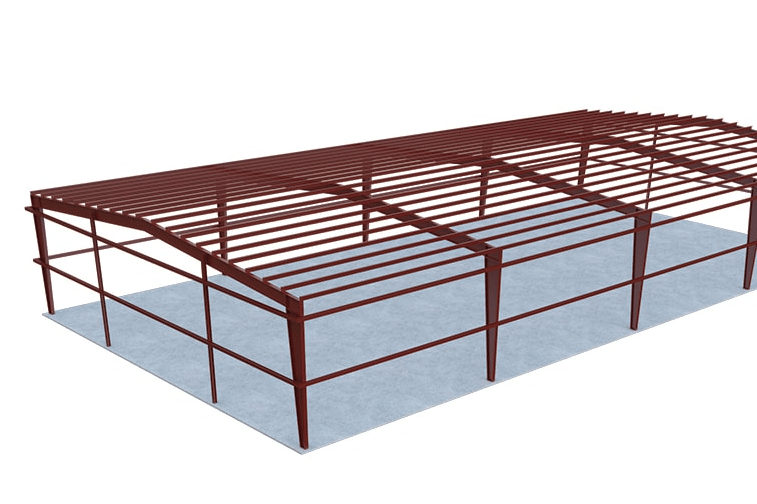
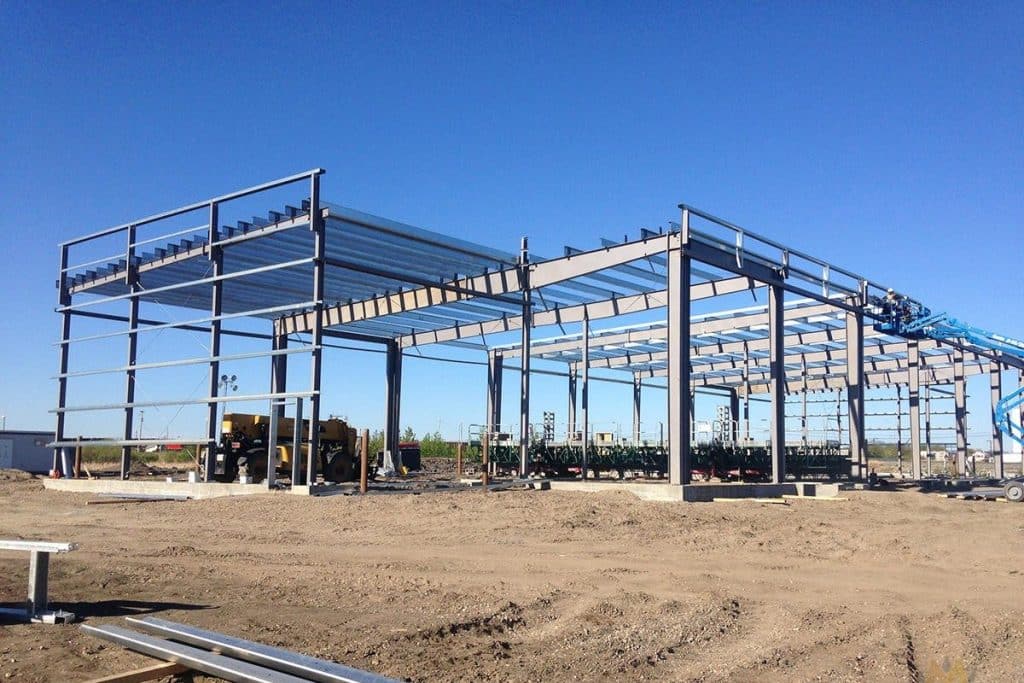
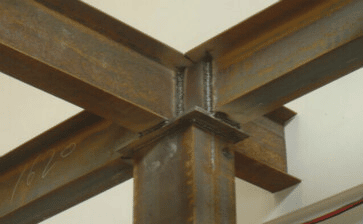
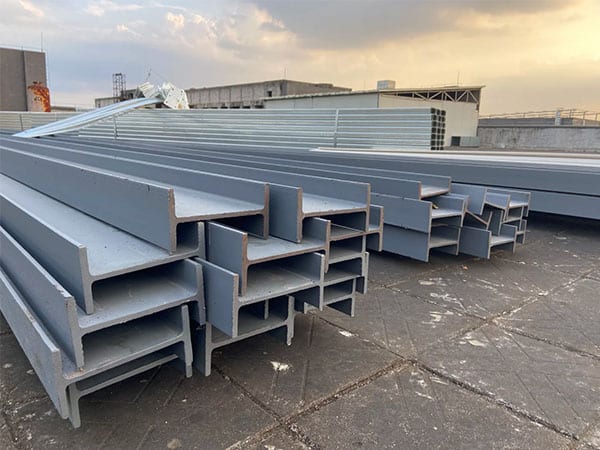
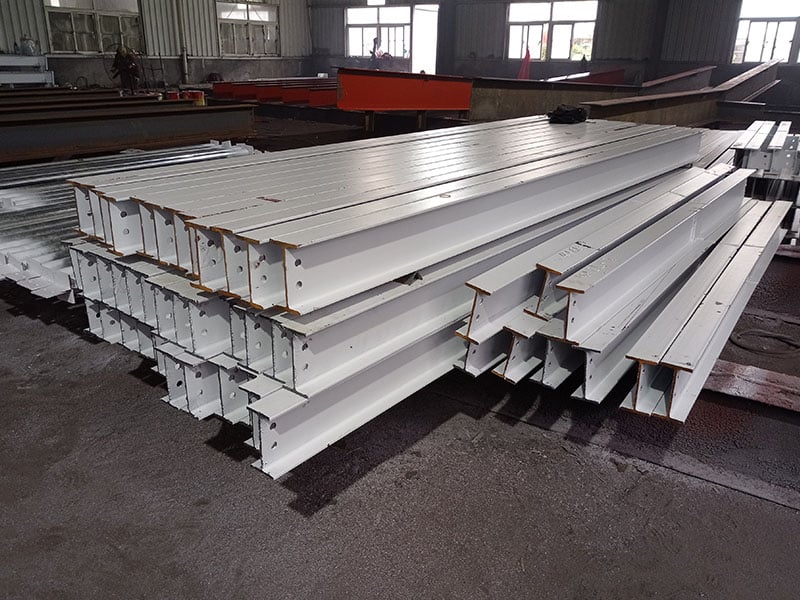
The main steel frame is the core load-bearing system of a steel structure building. It usually includes steel columns, steel beams, purlins, and different types of bracing members. These components determine the building span, height, load capacity, and overall structural stability.
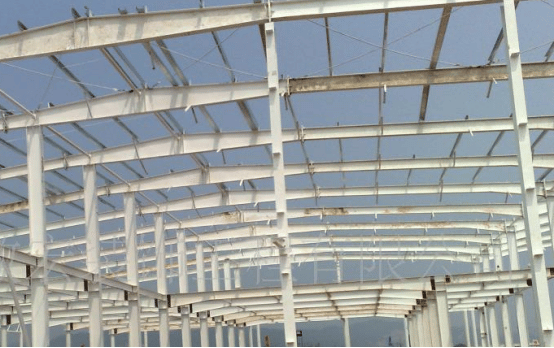
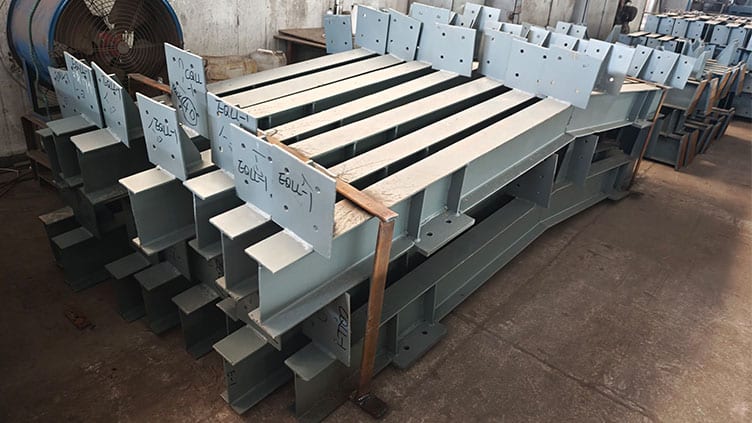
Steel columns and steel beams form the main structural framework. They support the self-weight of the building, equipment loads, wind loads, snow loads, and other external forces. Purlins are installed on the main frame to support the roof panels and wall panels. With column bracing and roof bracing, the entire frame gains better resistance to deformation and lateral movement.
For large-span warehouses and industrial workshops, the main steel frame design has a direct influence on interior space, steel usage, and on-site installation. We select suitable steel sections according to the building use, span, and load requirements, ensuring structural safety while balancing space efficiency and construction cost.
 Steel Columns
 Steel Beams
 H Beams
 I-Beams
 Tie Rod
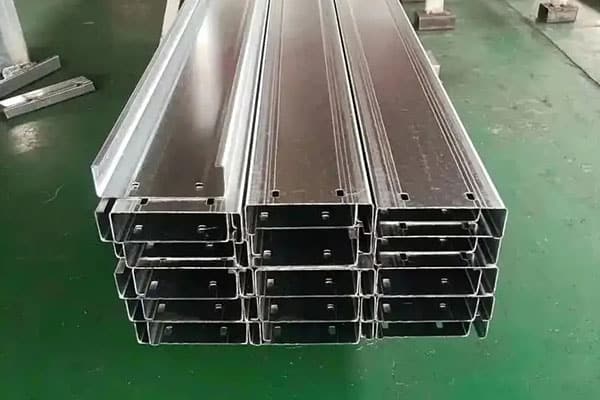 C Type Purlins
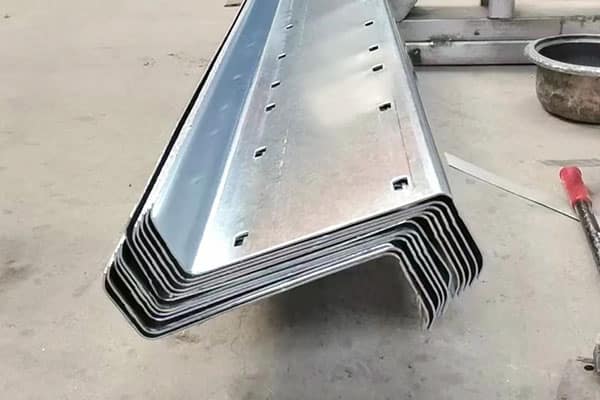 Z Type purlins


Enclosure System of Steel Structure Buildings
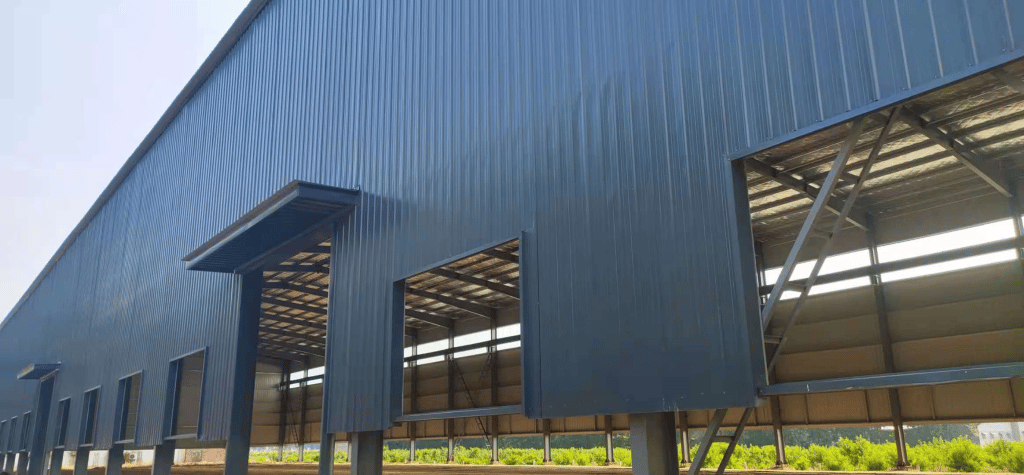
The roof and wall panels form the enclosure system of a steel structure building. This system protects the building from wind and rain, improves thermal insulation, reduces noise, and separates the indoor working space from the external environment.
Common enclosure materials include color steel profiled sheets and sandwich panels. For general building applications, double-layer color steel sheets with insulation wool can be used. For industrial workshops and warehouses with higher requirements for insulation or fire performance, rock wool, PU, or PIR sandwich panels can be selected according to project conditions.
The panels are fixed to the steel frame and wall purlins with suitable fasteners, which support installation efficiency and improve sealing performance. Wall panels can also be adjusted according to the required building appearance, while roof panels should be arranged according to the drainage direction. Together, they form a functional enclosure system for steel structure buildings.
 Color Steel profiled sheet – Enclosure System of Steel Structure Buildings
-
Sandwich Panel – Enclosure System of Steel Structure Buildings


Drainage Design for Steel Structure Buildings
Proper drainage design is important for steel structure buildings, especially in rainy or snowy regions. Poor drainage may cause water accumulation, leakage, panel damage, or faster corrosion around weak connection points.
K-HOME designs a suitable roof slope so that rainwater and melting snow can flow naturally to both sides of the roof. Gutters and downpipes are used to collect roof water and discharge it to the ground. Waterproof sealing materials are also applied at panel joints, roof openings, and pipe penetration areas to reduce the risk of leakage.
For regions with heavy rain or snow, the gutter size and the number of downpipes can be increased to improve drainage capacity. This helps the steel structure building maintain better performance and remain easier to maintain during long-term use.
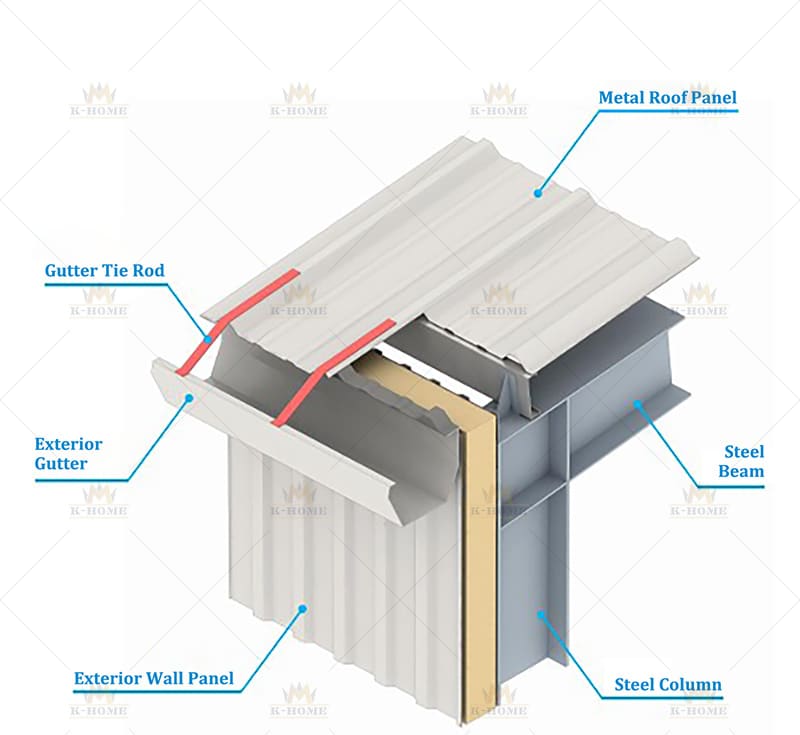 Exterior Gutter Joint Detail – Isometric View
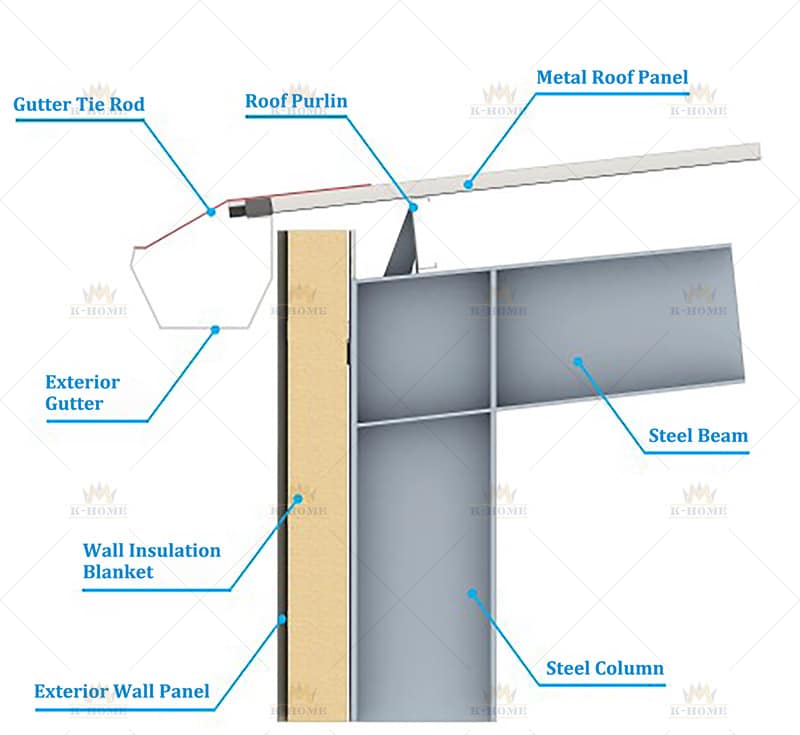 Exterior Gutter Joint Detail – Isometric View


Types of Steel Structure Buildings
The steel structure building is a structure mainly made of steel. It is mainly composed of steel beams, steel columns, steel trusses, and other components made of section steel and steel plates. The components or parts are usually connected by welds, bolts, or rivets.
The steel structure building is one of the main types of building structures. Because of its lightweight and simple construction, it is widely used in large workshops, venues, super high-rises, and other fields. The steel structure building types are divided according to the structural form, and can be divided into seven common steel structure types, such as layered steel structure, tower steel structure, and staircase steel structure:
Steel Structure Buildings for Different Countries and Environments
Climate, ground conditions, and natural disaster risks vary from country to country. For overseas steel structure building projects, K-HOME adjusts the material selection, structural design, and protective treatment according to the local environment, so the building can better adapt to long-term use on site.
In coastal and tropical regions with high humidity or salt spray, steel components are more exposed to corrosion. For these environments, anti-corrosion coating can be upgraded, weather-resistant roof and wall materials can be selected, and key connection areas can be sealed more carefully to slow down rust and improve durability.
In cold and snowy regions, such as Northern Europe or high-altitude areas, low temperatures and snow loads need to be considered during design. The roof structure, bracing system, and steel frame can be strengthened according to local snow load requirements to improve the load-bearing capacity of the building.
For areas affected by typhoons or earthquakes, the bracing system and connection nodes should receive more attention. By strengthening the support members and improving the connection details, the overall wind resistance and seismic performance of the steel structure building can be improved.
In hot and dry inland regions, the roof and wall enclosure system should focus more on thermal insulation and ventilation. Proper panel selection and building layout can help reduce indoor heat and improve daily use conditions.
With project-based design experience, K-HOME can provide steel structure buildings for different countries, climates, and site conditions. Each solution is adjusted according to the project location, building use, local requirements, and long-term operation needs.
WHY CHOOSE KHOME AS YOUR SUPPLIER?
K-HOME is one of the trusted factory manufacturers in China. From structural design to installation, our team can handle various complex projects. You will receive a prefabricated structure solution that best suits your needs.
You can send me a WhatsApp message (+86-18338952063), or send an email to leave your contact information. We will contact you as soon as possible.
Steel Structure Buildings Advantages and Disadvantages
As steel structures are used more and more widely in the market, people are paying more and more attention to steel structure factory buildings, and steel structure factory buildings have many advantages, such as:
Steel Structure Building Design

Single-span double-slope portal steel frame
Variable section columns and roof beams are the most economical design. The roof slope is small, which saves the heating and insulation cost of non-use space. The common span is 15-36 meters, which is suitable for the needs of various types of buildings.

Double-span double-slope steel frame
The interior columns are designed to allow the structure to achieve larger roof spans, usually 36-72 more economical meters.

Multi-span double-slope steel frame
The design of the inner column makes the section of the component more economical, and at the same time meets the requirements of large depth. It is an economical structural form for shopping malls and commercial office buildings.

Multi-span multi-slope steel frame
The multi-span and multi-slope design is suitable for the needs of various types of buildings and makes full use of the floor space.

High and low span steel frame
The interior columns are designed to allow the structure to achieve larger roof spans, usually 36-72 meters, which are more economical.

Single-span double-slope steel frame
Equal cross-section column, joint design with fixed bottom end, can bear a larger bearing bending moment, suitable for buildings with crane load.

Single-span single-slope steel frame
Small roof beam slope and single-sided roof drainage area are suitable for the needs of various types of buildings, such as shopping centers, convenience stores, and fire stations.

Composite steel frame
The design of the steel structure mezzanine is suitable for the needs of various types of buildings, and it is easy to separate the space inside the building.

Multi-layer frame
The steel structure frame system has a smaller weight than the reinforced concrete system and is suitable for multi-story building structures such as workshops, warehouses, and shopping malls.
Installation of Prefabricated Steel Structure Buildings
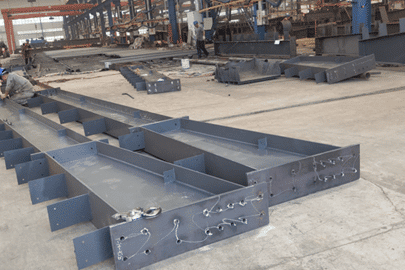
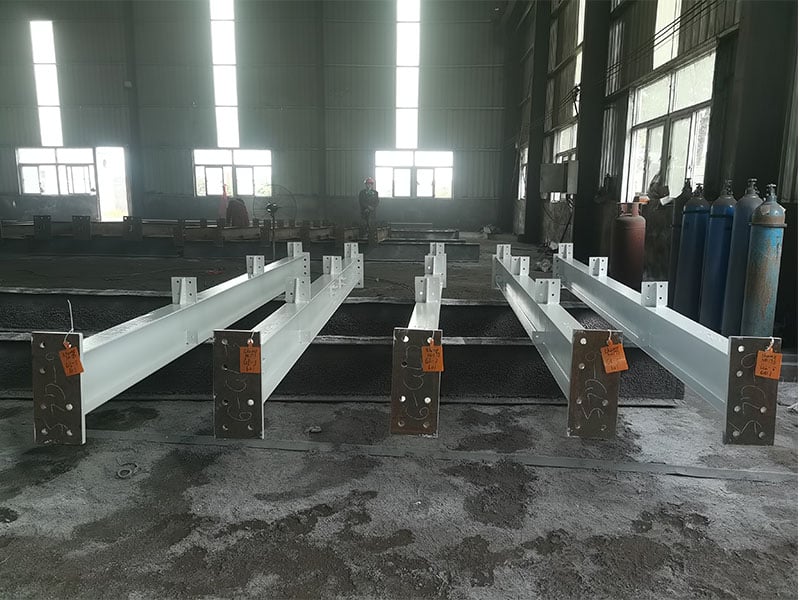
The main components of prefabricated steel structure buildings are processed in the factory before delivery. Steel preparation, cutting, welding, drilling, component numbering, anti-corrosion coating, and pre-delivery inspection can all be controlled during production. This helps reduce on-site processing and improves installation efficiency.
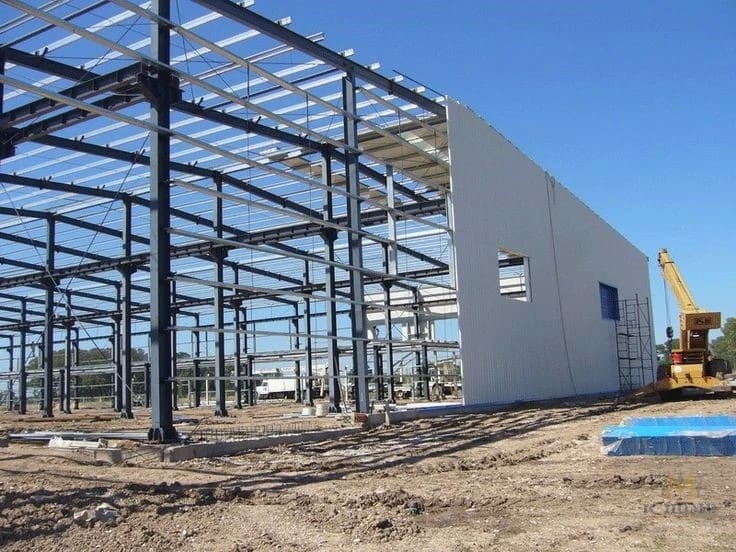
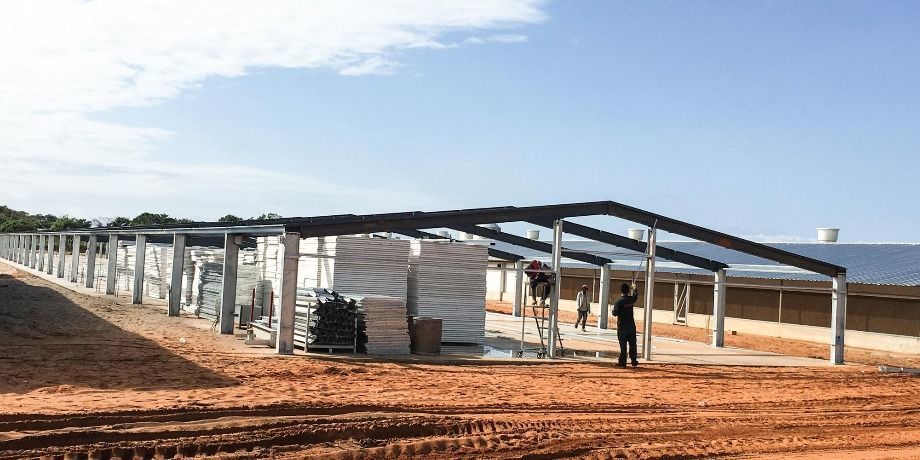
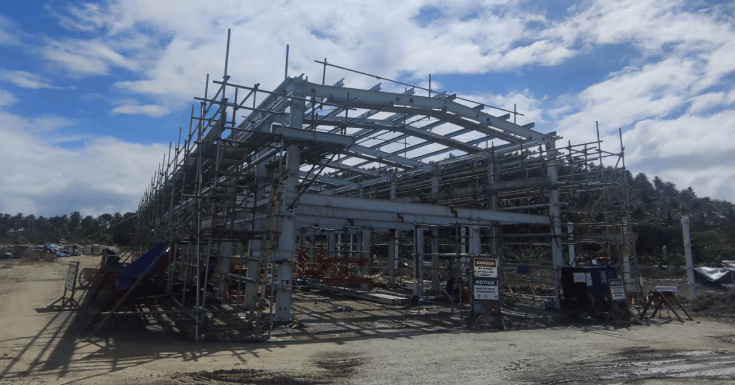
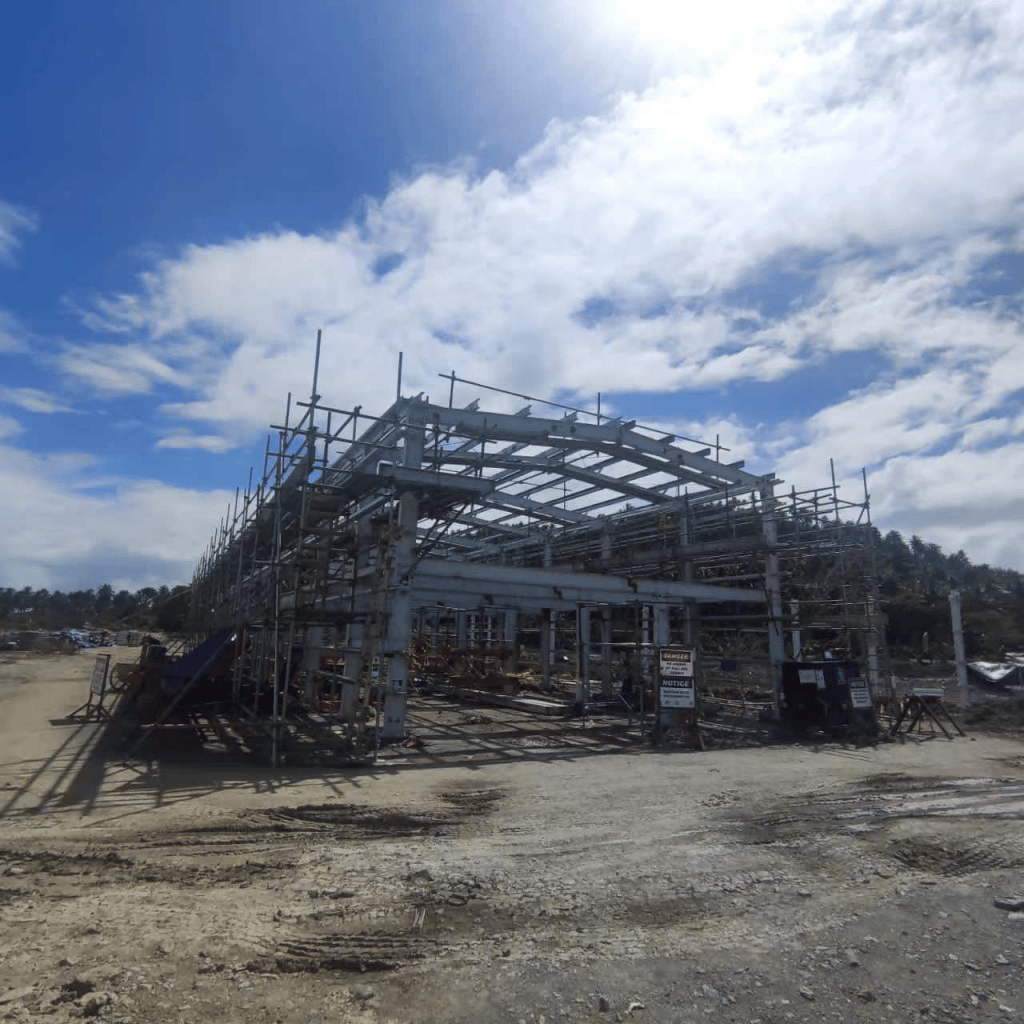
Before site installation, the foundation and anchor bolts should be completed first, as they provide the base reference for the whole building. The steel columns are then erected, followed by the installation of steel beams to form the main structural frame. After the main frame is assembled, aligned, and fixed, the purlins and bracing members are installed step by step.
Roof panels, wall panels, skylight panels, doors, windows, gutters, and downpipes are installed after the steel frame is completed. The installation team should then check bolt tightening, roof drainage, door and window operation, and the condition of the anti-corrosion coating. Final sealing, cleaning, and overall inspection are completed before the building is put into use.
This standardized prefabrication and installation process reduces the amount of site work, improves construction efficiency, and helps maintain more consistent project quality.
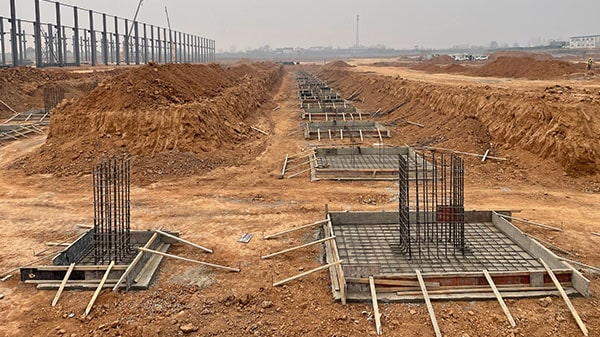 Foundation
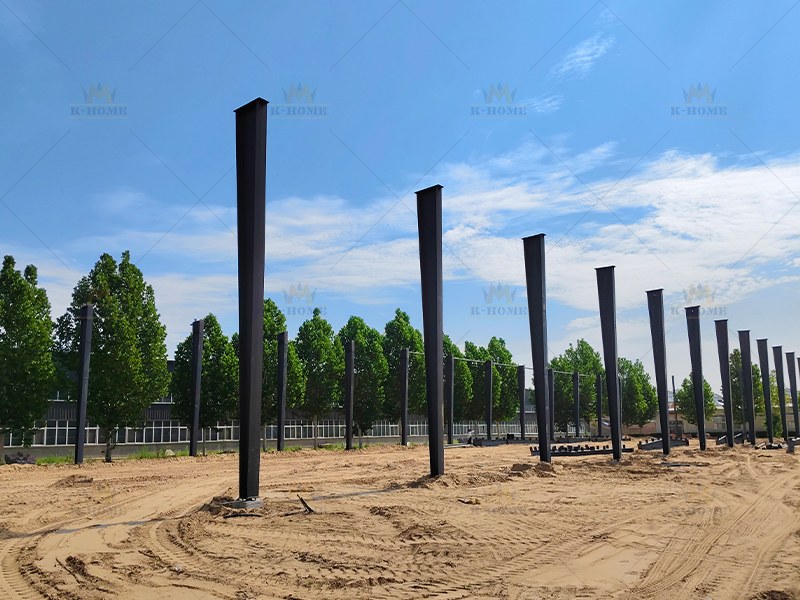 Erecting Steel Columns
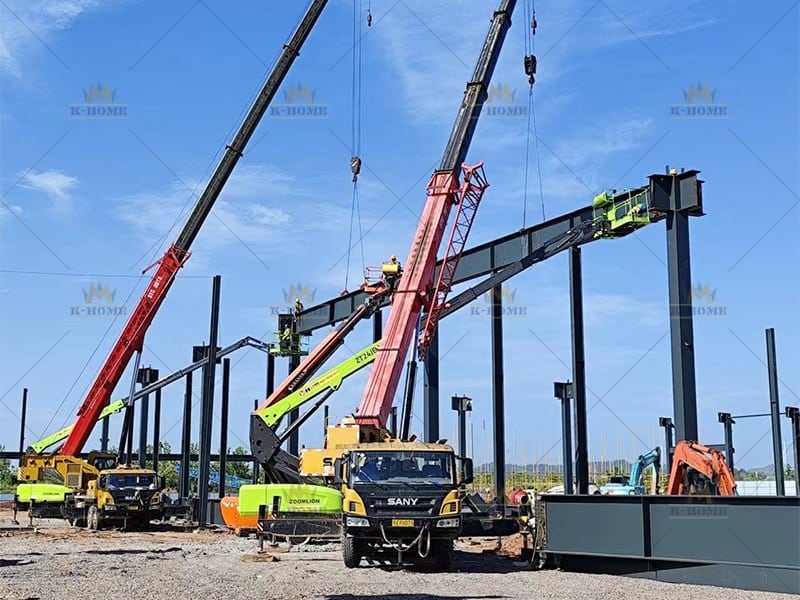 Hoisting Steel Beams
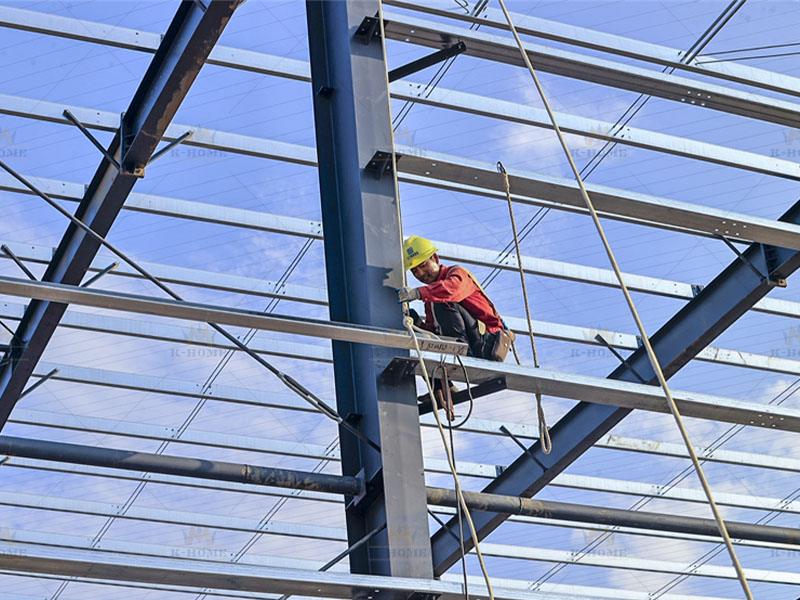 Installing Purlins
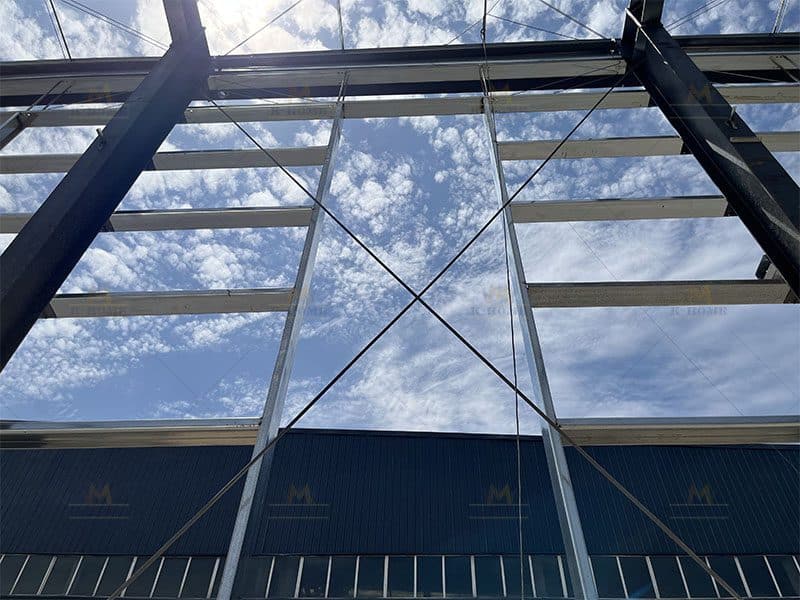 Tie Rods
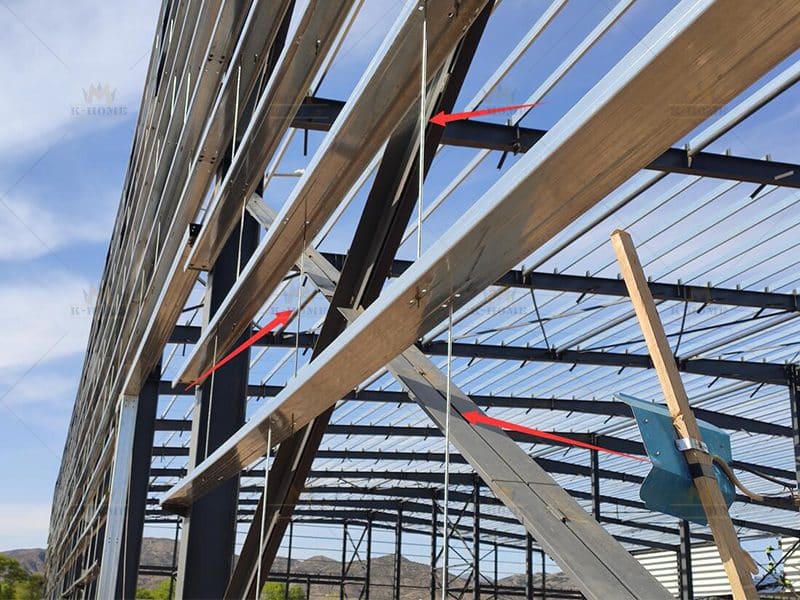 Roof Bracing Rods
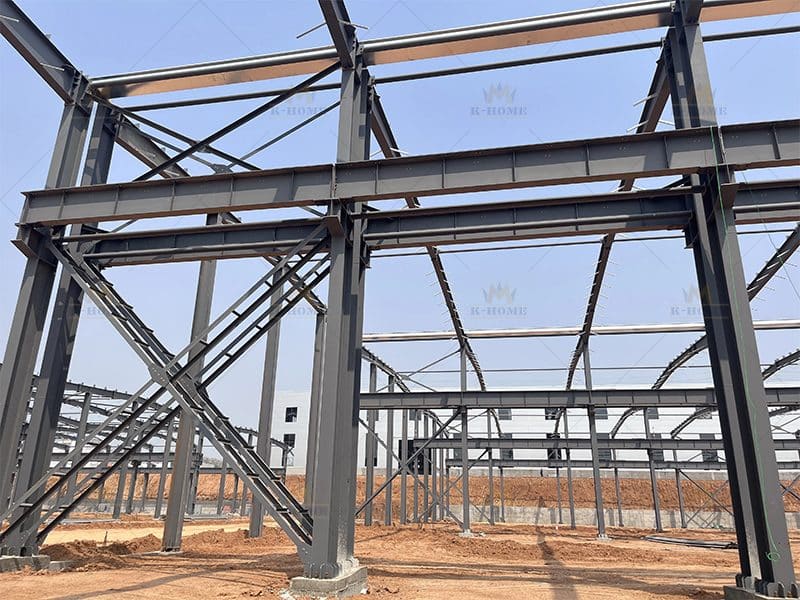 Column Bracing
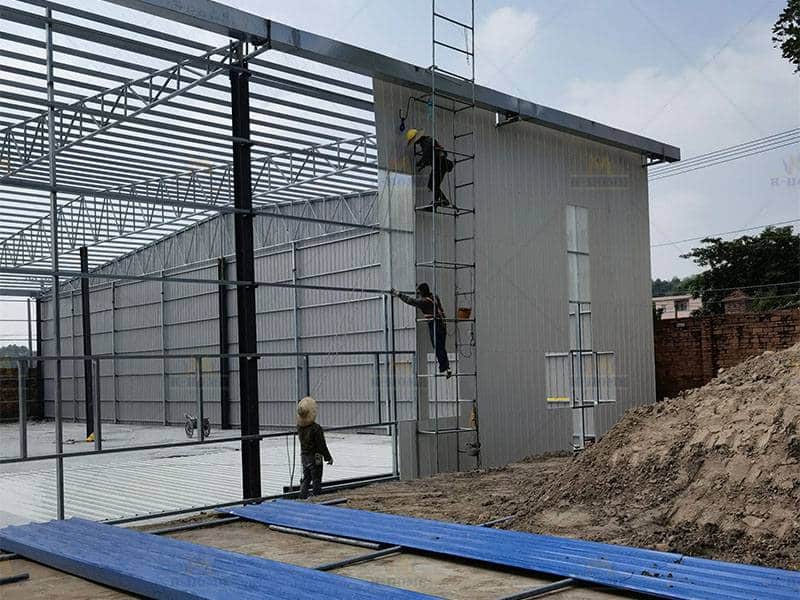 Installing Wall Panels


Design and Maintenance Points to Consider
To extend the service life of steel structure buildings, proper design and regular maintenance should work together. A well-designed structure can reduce potential risks from the beginning, while scheduled inspection helps keep the building safe during long-term use.
Steel components should be protected against corrosion, especially in coastal, humid, rainy, or chemical environments. Common anti-corrosion methods include surface cleaning, anti-corrosion primer, finish paint, hot-dip galvanizing, and regular inspection.
-
Spraying Anti-corrosive Primers
 Spraying Top Coat for Steel Structures
-
Derusting of Steel Structure Buildings


For projects with fire protection requirements, fire-resistant coating, fireproof boards, or other protection systems can be added according to local building codes. Roof drainage, bolt tightening, coating condition, and door and window sealing should also be checked during long-term use. With proper inspection and maintenance, a steel structure building can remain in good working condition for a longer period.
Custom Steel Structure Buildings Start with Real Project Requirements
Steel structure buildings are not fixed products. Different applications, functional requirements, and site conditions lead to different design priorities. Warehouses, workshops, factory buildings, and logistics buildings are all steel structure buildings, but each project has its own structural and operational requirements.
A steel structure warehouse usually requires clear interior height, proper storage rack layout, forklift access, loading doors, and space for future expansion. A steel structure workshop should be designed according to equipment positions, production flow, raw material areas, finished product areas, worker access, and crane systems. A steel structure factory building is often used for long-term production, so ventilation, lighting, anti-corrosion treatment, fire protection, roof drainage, and maintenance access should also be considered.
Before the project begins, K-HOME evaluates the actual project requirements, including building use, size, span, height, local wind load and snow load, and whether cranes or large equipment are required. We also review the project location, local climate, natural conditions, applicable building requirements, and budget range. Based on this information, we design a dedicated prefabricated steel structure building solution for the project.
Contact Us >>
Have questions or need help? Before we start, you should know that almost all prefab steel buildings are customized.
Our engineering team will design it according to local wind speed, rain load, length*width*height, and other additional options. Or, we could follow your drawings. Please tell me your requirement, and we will do the rest!
Use the form to reach out and we will be in touch with you as quickly as possible.